English
 Español
 tiếng việt
 русский
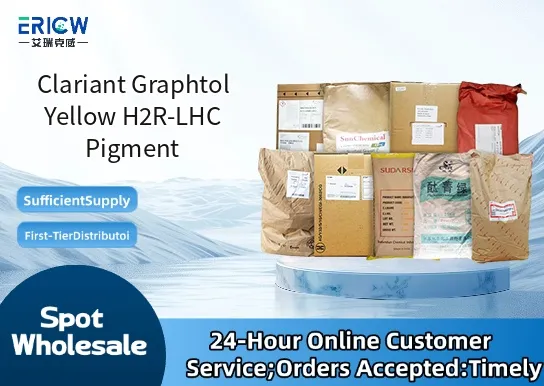
High chroma yellow shade with excellent color strength and clean hue.
Outstanding thermal stability suitable for high-temperature processing up to 280 °C.
Good lightfastness and weather resistance in demanding outdoor applications.
Excellent dispersibility in both polar and non-polar polymer matrices.
Low migration and bleed resistance in PVC, polyolefins, and engineering plastics.
Automotive interior and exterior plastic components.
Household appliances housings and decorative trim.
Packaging films requiring FDA-compliant colorants (where permitted).
Wire and cable jacketing for enhanced visibility and durability.
Industrial injection-molded parts exposed to UV and thermal stress.
| Chemical Type | Azo pigment (disazo) |
| Product Form | Free-flowing powder |
| Appearance | Yellow to orange-yellow fine powder |
| Primary Applications | PVC, polyolefins (PP, PE), ABS, PS, and engineering plastics |
| Key Features | Thermally stable, low volatility, high tinctorial strength |
| Benefits | Consistent batch-to-batch color performance and reduced processing defects |
| Regulatory Compliance | REACH registered; compliant with EU Directive 2002/61/EC for azo dyes |
| Recommended Processing | Compounding, injection molding, extrusion |
Q1: What is the primary application area for Graphtol Yellow H2R-LHC?
A: Graphtol Yellow H2R-LHC is specifically developed for high-performance industrial coatings and inks, particularly where excellent lightfastness, thermal stability, and resistance to solvents and migration are required — such as in automotive refinish, coil coating, and packaging inks.
Q2: Is this pigment suitable for food-contact applications?
A: Graphtol Yellow H2R-LHC is not pre-qualified for direct food-contact use. Its suitability depends on final formulation compliance with applicable regional regulations; users must conduct full regulatory evaluation and migration testing as part of their own safety assessment.
Q3: How does H2R-LHC differ from other Graphtol Yellow grades?
A: The “H2R-LHC” designation indicates enhanced heat resistance (H2R) and low-haze clarity (LHC), making it especially suited for transparent or pastel-tinted systems where color purity and minimal scattering are critical — unlike standard grades optimized for opacity or cost efficiency.
Q4: What dispersion methods are recommended for optimal performance?
A: For best results, high-shear dispersion using bead mills or three-roll mills is recommended. Pre-wetting with compatible solvents or resin solutions helps achieve uniform distribution, especially in low-viscosity ink systems.
Contact With Us:
E-mail: wangxingqiang@ericwchem.com
Have a Questions? Call Us:
Add:
Building A1, Jiete Industrial Park, Huangpu District, Guangzhou City, Guangdong Province, China