English
 Español
 tiếng việt
 русский
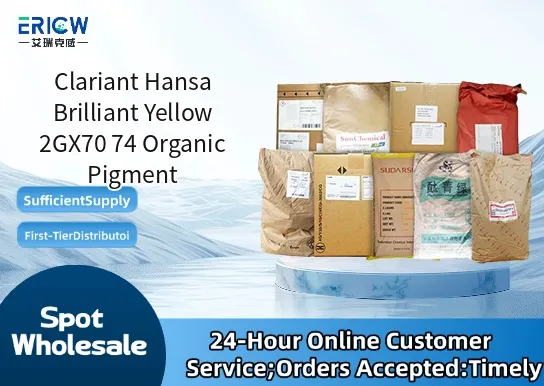
High chroma and clean greenish-yellow shade for vibrant color reproduction.
Excellent lightfastness and weather resistance in demanding outdoor applications.
Good heat stability suitable for processing temperatures up to 180 °C.
Outstanding dispersibility in both polar and non-polar media, including PVC and polyolefins.
Low volatility and minimal migration, ensuring color consistency in polymer systems.
Coloration of rigid and flexible polyvinyl chloride (PVC) profiles and films.
Masterbatch formulations for polyolefin fibers and injection-molded parts.
Industrial coatings requiring high gloss and color fidelity.
Printing inks for packaging and label applications.
Plastic caps, closures, and consumer goods requiring FDA-compliant colorants where applicable.
| Chemical Type | Monosazo organic pigment (C.I. Pigment Yellow 3) |
| Product Form | Free-flowing powder |
| Appearance | Bright greenish-yellow powder |
| Primary Applications | PVC, polyolefins, coatings, inks |
| Key Features | High tinctorial strength, good thermal stability, low bleed |
| Benefits | Consistent batch-to-batch performance, easy dispersion, excellent opacity |
| Regulatory Compliance | REACH registered; compliant with EU Directive 2002/72/EC for food-contact plastics (subject to specific conditions) |
Q1: What are the primary application areas for Hansa Brilliant Yellow 2GX70 74?
A: This pigment is widely used in industrial coatings, printing inks (especially offset and gravure), and plastics applications where high brightness, good lightfastness, and clean yellow shade are required. It is not recommended for outdoor architectural coatings or applications demanding exceptional weather resistance.
Q2: How does Hansa Brilliant Yellow 2GX70 74 compare to other monoazo yellow pigments in terms of heat stability?
A: It offers moderate thermal stability suitable for standard extrusion processes in polyolefins and PVC, but may undergo slight shade shift above 180 °C. For high-temperature engineering polymers like polyesters or polycarbonates, alternative high-stability pigments are generally preferred.
Q3: Is this pigment suitable for food-contact plastic applications?
A: Hansa Brilliant Yellow 2GX70 74 is not approved for direct food-contact applications under major global regulatory frameworks. Customers requiring food-safe colorants should consult Clariant’s portfolio of certified food-contact pigments and verify compliance with applicable regional requirements.
Q4: What dispersion characteristics can be expected in solvent-based ink systems?
A: The pigment exhibits good wetting and dispersibility in common aromatic and aliphatic hydrocarbon solvents, as well as ester- and ketone-based systems. Optimal performance typically requires standard high-speed dispersing or bead-milling; stabilization with appropriate resin vehicles is recommended to maintain gloss and rheological stability.
Contact With Us:
E-mail: wangxingqiang@ericwchem.com
Have a Questions? Call Us:
Add:
Building A1, Jiete Industrial Park, Huangpu District, Guangzhou City, Guangdong Province, China