English
 Español
 tiếng việt
 русский
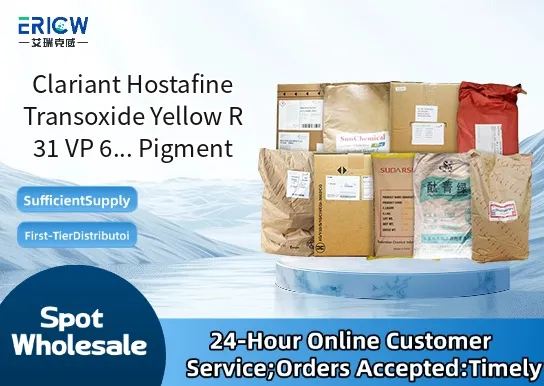
High chroma yellow shade with excellent lightfastness and weather resistance.
Optimized dispersibility in aqueous and solvent-based systems for consistent color development.
Good thermal stability suitable for medium-temperature processing applications.
Low volatility and minimal extractables, supporting compliance with stringent regulatory requirements.
Consistent batch-to-batch color reproducibility and rheological performance.
Automotive coatings (OEM and refinish).
Industrial coil and can coatings.
Plastic coloration for injection molding and extrusion (e.g., PP, ABS, PS).
High-performance inks for packaging and decorative printing.
Architectural and protective coatings requiring durable chromatic performance.
| Chemical Type | Organic pigment (Azo condensation type) |
| Product Form | Free-flowing powder |
| Appearance | Yellow to orange-yellow powder |
| Primary Applications | Coatings, plastics, inks |
| Key Features | High transparency, good migration resistance |
| Benefits | Enhanced color strength and gloss retention in film-forming systems |
| Regulatory Status | Compliant with EU REACH; not restricted under TSCA |
| Storage Conditions | Store in cool, dry place below 30°C; protect from moisture |
Q1: What is the primary chemical class and key performance characteristic of Hostafine Transoxide Yellow R 31 VP 6...?
A: It is a high-performance, thermally stable transoxide yellow pigment, belonging to the diarylide acetoacetanilide chemical family. Its key characteristics include excellent lightfastness, good heat stability up to typical polymer processing temperatures, and strong tinting strength in demanding applications such as engineering plastics and coatings.
Q2: Is this pigment suitable for food-contact plastics or regulated packaging applications?
A: Hostafine Transoxide Yellow R 31 VP 6... is not certified for direct food-contact applications under major global regulatory frameworks. It is intended for non-food-contact industrial uses, including automotive components, technical parts, and decorative coatings where regulatory compliance for migration is not required.
Q3: How does this pigment perform in polyolefin systems like PP and PE?
A: It demonstrates good dispersion stability and minimal blooming in polyolefins when properly compounded using standard masterbatch techniques. Performance is optimized with appropriate dispersants and thermal stabilization packages, particularly in thin-section or high-temperature molding processes.
Q4: What are the recommended handling precautions during dry blending or compounding?
A: As a fine organic pigment powder, it should be handled in well-ventilated areas with appropriate dust control measures. Avoid inhalation of airborne particles and use personal protective equipment such as respirators and gloves. Static charge mitigation is advised during pneumatic transfer or high-speed mixing.
Contact With Us:
E-mail: wangxingqiang@ericwchem.com
Have a Questions? Call Us:
Add:
Building A1, Jiete Industrial Park, Huangpu District, Guangzhou City, Guangdong Province, China