English
 Español
 tiếng việt
 русский
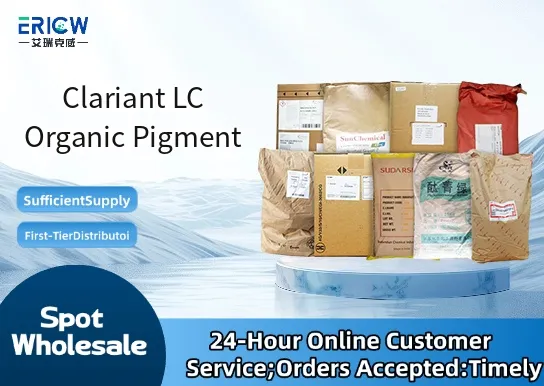
Exceptional lightfastness and weather resistance for long-term color stability.
High tinctorial strength with excellent dispersion performance in aqueous and solvent-based systems.
Low volatility and non-migrating properties, ensuring compliance with stringent regulatory requirements.
Improved thermal stability suitable for processing temperatures up to 220 °C.
Consistent batch-to-batch reproducibility supported by Clariant’s certified quality management system.
Automotive coatings requiring high durability and OEM approval.
Industrial maintenance coatings for infrastructure and machinery.
Plastic masterbatches for outdoor applications including PP, HDPE, and ABS.
High-performance inks for packaging and labeling where migration resistance is critical.
Architectural coatings demanding UV resistance and color retention.
| Chemical Type | High-performance azo or quinacridone derivative (class-specific) |
| Product Form | Fine powder or pre-dispersed paste |
| Appearance | Free-flowing, uniform colored powder or viscous paste |
| Primary Applications | Coatings, plastics, inks |
| Key Features | Lightfastness ≥7 (ISO 105-B02), Weathering ≥4 (ISO 11341) |
| Benefits | Reduced formulation complexity, extended service life, REACH-compliant |
| Regulatory Status | Compliant with EU REACH, FDA 21 CFR 178.3290 (for specific grades), non-GMO |
Q1: What are the primary application areas for Clariant LC Organic Pigments?
A: Clariant LC Organic Pigments are specially engineered for demanding coloration applications in thermoplastics, including polyolefins (PP, PE), engineering plastics (PA, PC, PBT), and thermoplastic elastomers. They are widely used in automotive interior components, consumer goods, and technical parts where high thermal stability, excellent dispersion, and consistent batch-to-batch color reproducibility are required.
Q2: How do LC pigments differ from standard organic pigments in terms of processing performance?
A: LC (Low-Carrier) Organic Pigments feature optimized particle morphology and surface treatment to enable superior melt dispersibility and reduced agglomeration during compounding and injection molding. This translates to lower energy input during extrusion, improved color strength development, and minimized filter pressure build-up—especially beneficial in high-output or fine-filter production lines.
Q3: Are Clariant LC pigments suitable for food-contact or medical-grade polymer applications?
A: Certain LC grades are formulated for regulatory compliance in specific food-contact and medical applications, subject to full formulation review and end-use conditions. Final suitability depends on the polymer matrix, processing parameters, and applicable regional regulations. Customers are advised to consult Clariant’s regulatory documentation and perform application-specific testing prior to commercial use.
Q4: What is the typical dosage range for LC pigments in polymer masterbatches?
A: Dosage varies based on desired color intensity, polymer type, and processing method, but LC pigments are typically used at low concentrations due to their high tinctorial strength. In masterbatch formulations, loading generally ranges from 0.1% to 2% by weight relative to the final compound—often enabling cost-efficient, high-performance coloration without compromising mechanical properties.
Contact With Us:
E-mail: wangxingqiang@ericwchem.com
Have a Questions? Call Us:
Add:
Building A1, Jiete Industrial Park, Huangpu District, Guangzhou City, Guangdong Province, China