English
 Español
 tiếng việt
 русский
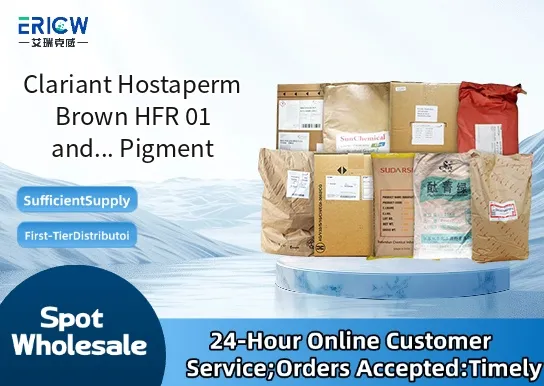
High thermal stability suitable for processing temperatures up to 280 °C
Excellent lightfastness and weather resistance (ISO 105-B02, Grade 7–8)
Good dispersibility in both polar and non-polar polymer matrices
Low migration tendency in PVC, polyolefins, and engineering plastics
Compliant with major global regulatory frameworks including EU REACH and US FDA 21 CFR §178.3297
Coloration of rigid and flexible PVC profiles, cables, and flooring
Mass-coloring of polypropylene (PP) and polyethylene (PE) packaging films
Engineering plastic components for automotive interior trim
Masterbatch production for injection-molded consumer goods
Coating systems requiring durable brown shades under outdoor exposure
| Chemical Type | Complex inorganic colored pigment (mixed metal oxide) |
| Product Form | Free-flowing powder |
| Appearance | Brown to reddish-brown fine powder |
| Primary Applications | PVC, polyolefins, engineering plastics, coatings |
| Key Features | Thermal stability, lightfastness, low migration, high tinting strength |
| Benefits | Consistent shade reproducibility, excellent processability in extrusion and injection molding |
| Density (g/cm³) | 4.2–4.6 |
| Particle Size (D₅₀, µm) | 0.3–0.5 |
Q1: What are the primary application areas for Hostaperm Brown HFR 01 pigment?
A: Hostaperm Brown HFR 01 is widely used in high-performance industrial coatings, automotive refinish systems, and engineering plastics where excellent heat stability, lightfastness, and weather resistance are required. It is also suitable for select ink formulations demanding strong tinting strength and dispersion stability.
Q2: How does Hostaperm Brown HFR 01 perform under elevated temperature conditions?
A: This pigment exhibits very good thermal stability, making it suitable for processing temperatures commonly encountered in polyolefin and engineering plastic compounding, as well as in baking finishes. Its molecular structure resists degradation during standard extrusion and curing cycles.
Q3: Is Hostaperm Brown HFR 01 compatible with common organic solvent-based and water-based systems?
A: Yes — the pigment demonstrates broad compatibility across solvent-borne coating media (e.g., acrylic, polyester, and alkyd resins) and selected aqueous dispersions. Optimal performance typically requires appropriate dispersant selection and milling to achieve stable, fine-particle distributions.
Q4: What is the typical dosage range when using this pigment in polymer applications?
A: Dosage depends on the desired shade intensity and substrate opacity, but it is generally used at low concentrations — typically ranging from 0.1% to 2% by weight in most thermoplastic and thermoset systems.
Contact With Us:
E-mail: wangxingqiang@ericwchem.com
Have a Questions? Call Us:
Add:
Building A1, Jiete Industrial Park, Huangpu District, Guangzhou City, Guangdong Province, China