English
 Español
 tiếng việt
 русский
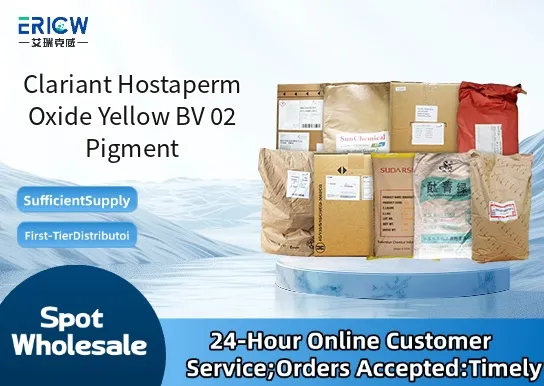
High thermal stability suitable for processing temperatures up to 250 °C.
Excellent lightfastness and weather resistance in outdoor applications.
Good dispersibility in both polar and non-polar polymer systems.
Low volatility and minimal migration in polyolefin and PVC compounds.
Compliant with major global regulatory frameworks including EU REACH and US FDA 21 CFR for selected applications.
Coloration of polypropylene (PP) and polyethylene (PE) packaging films.
Automotive interior plastics requiring long-term color retention.
Industrial coatings for metal and plastic substrates.
Masterbatch formulations for injection-molded consumer goods.
Extruded profiles and blow-molded containers in food-contact-compliant grades.
| Chemical Type | Iron oxide-based inorganic pigment |
| Product Form | Free-flowing powder |
| Appearance | Bright yellow-orange granular powder |
| Primary Applications | Polyolefins, PVC, engineering plastics, coatings |
| Key Features | Thermal stability, low dusting, high tinctorial strength |
| Benefits | Consistent batch-to-batch color, low abrasivity, easy incorporation |
| Particle Size (D50) | 0.8–1.2 µm (by laser diffraction) |
| Volatile Matter (105 °C) | ≤ 0.5 wt% |
Q1: What is the primary chemical composition of Hostaperm Oxide Yellow BV 02?
A: Hostaperm Oxide Yellow BV 02 is an inorganic mixed-metal oxide pigment based on iron and zinc, engineered for high thermal stability and excellent lightfastness. It does not contain heavy metals such as lead, cadmium, or chromium(VI).
Q2: Is this pigment suitable for use in food-contact plastics?
A: Yes — Hostaperm Oxide Yellow BV 02 is compliant with major global food-contact regulations for plastics, including FDA 21 CFR §178.3297 and EU Regulation (EC) No 1935/2004, when used within approved concentration limits and appropriate polymer matrices.
Q3: How does this pigment perform under high-temperature processing conditions?
A: It exhibits outstanding thermal stability, maintaining color integrity during standard polymer processing up to 300 °C — making it well-suited for engineering thermoplastics such as polyamide, polyesters, and polypropylene.
Q4: What is the typical dosage range in plastic applications?
A: Dosage depends on the desired shade strength and polymer system, but it is generally used at low concentrations — typically ranging from 0.1% to 2% by weight — with good dispersion achievable using standard compounding techniques.
Q5: Can Hostaperm Oxide Yellow BV 02 be used in solvent-based coatings?
A: While primarily developed for polymer coloring, it demonstrates good compatibility in many solvent-based industrial coating systems, particularly where high weather resistance and chemical inertness are required — though dispersion optimization may be needed depending on resin and solvent selection.
Contact With Us:
E-mail: wangxingqiang@ericwchem.com
Have a Questions? Call Us:
Add:
Building A1, Jiete Industrial Park, Huangpu District, Guangzhou City, Guangdong Province, China