English
 Español
 tiếng việt
 русский
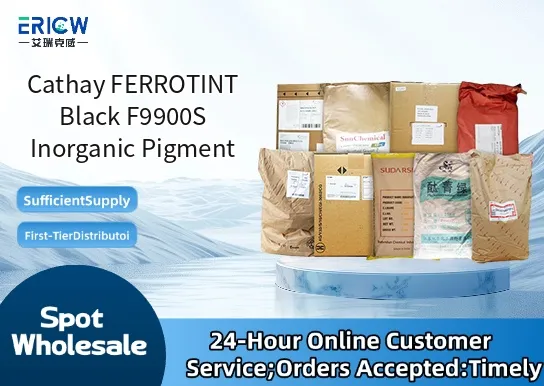
High thermal stability suitable for processing temperatures up to 400°C.
Excellent lightfastness and weather resistance, maintaining color integrity under UV exposure.
Non-toxic, heavy-metal-free formulation compliant with global environmental regulations (RoHS, REACH).
Superior dispersion performance in both aqueous and solvent-based systems.
Consistent particle size distribution ensuring uniform tinting strength and batch-to-batch reproducibility.
Automotive coatings requiring high durability and gloss retention.
Plastic coloration for engineering thermoplastics including polypropylene and ABS.
Architectural coatings and exterior wall paints exposed to harsh climatic conditions.
Industrial powder coatings demanding thermal stability during curing.
High-performance inks for packaging and labeling applications.
| Chemical Type | Iron oxide-based complex inorganic colored pigment |
| Product Form | Fine dry powder |
| Appearance | Jet black, free-flowing powder |
| Primary Applications | Coatings, plastics, inks, construction materials |
| Key Features | Heat stable, UV resistant, chemically inert |
| Benefits | Low migration, non-bleeding, excellent opacity |
| Recommended Loading Range | 1–5 wt% depending on substrate and performance requirements |
| Storage Conditions | Store in cool, dry place away from direct sunlight and moisture |
Q1: What is the primary chemical composition of Cathay FERROTINT Black F9900S?
A: Cathay FERROTINT Black F9900S is a high-performance inorganic black pigment based on complex iron oxide–manganese oxide spinel chemistry, engineered for enhanced thermal stability and UV resistance.
Q2: Is this pigment suitable for use in heat-sensitive polymer systems such as polyolefins or engineering thermoplastics?
A: Yes — F9900S is specifically formulated for excellent thermal stability, making it compatible with processing temperatures up to 300 °C, including injection molding and extrusion of polypropylene, polyethylene, and certain engineering plastics.
Q3: How does F9900S compare to carbon black in terms of dispersion behavior and color strength?
A: Unlike carbon black, F9900S offers inherently better dispersibility in polar and non-polar matrices due to its surface-modified inorganic structure, delivering consistent jetness and reduced agglomeration risk. Its color strength is comparable to mid-grade carbon blacks but without conductivity or UV degradation concerns.
Q4: Can F9900S be used in food-contact compliant compounds?
A: While F9900S itself contains no heavy metals of concern and complies with general global pigment purity guidelines, final food-contact suitability depends on full formulation assessment and regulatory approval by the relevant authority (e.g., FDA, EFSA) for the specific application and migration scenario.
Q5: What is the typical dosage range when using F9900S in industrial coatings or masterbatches?
A: Dosage depends on the desired opacity, undertone, and substrate — generally ranges from 0.1% to 2% by weight in final formulations, with masterbatch concentrations commonly adjusted between 10% and 30% to ensure optimal handling and dispersion efficiency.
Contact With Us:
E-mail: wangxingqiang@ericwchem.com
Have a Questions? Call Us:
Add:
Building A1, Jiete Industrial Park, Huangpu District, Guangzhou City, Guangdong Province, China