English
 Español
 tiếng việt
 русский
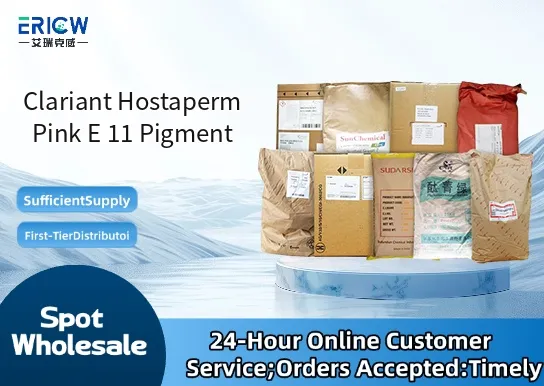
High chroma, clean pink shade with excellent lightfastness and weather resistance.
Outstanding thermal stability suitable for high-temperature processing up to 280 °C.
Good dispersibility in both polar and non-polar polymer matrices.
Low migration tendency, ensuring color integrity in demanding applications.
Compliant with major global regulatory frameworks including EU REACH and FDA 21 CFR for relevant use cases.
Polyolefin packaging films and containers (e.g., PP, HDPE).
Automotive interior plastics requiring long-term UV and heat resistance.
Engineering plastics such as ABS and PC for consumer electronics housings.
Household appliances and durable goods components.
Masterbatch formulations for injection molding and extrusion processes.
| Chemical Type | Quinacridone derivative |
| Product Form | Fine powder |
| Appearance | Free-flowing reddish-pink powder |
| Primary Applications | Polyolefins, engineering plastics, masterbatches |
| Key Features | High tinctorial strength, excellent dispersion, low dusting |
| Benefits | Consistent batch-to-batch color, minimal filter clogging, process robustness |
| Recommended Processing Temperature Range | Up to 280 °C (short-term) |
| Regulatory Status | EU REACH registered; compliant with ISO 9001 manufacturing standards |
Q1: What is the primary chemical class of Hostaperm Pink E 11?
A: Hostaperm Pink E 11 is a high-performance quinacridone-based organic pigment, known for its excellent lightfastness, thermal stability, and strong tinting strength in demanding polymer and coating applications.
Q2: Is this pigment suitable for food-contact plastics?
A: Hostaperm Pink E 11 is not pre-approved for direct food-contact applications under major global regulatory frameworks. Its use in food-contact materials requires full formulation-level compliance assessment by the end-user, including migration testing and regulatory review per applicable jurisdiction.
Q3: Which polymers is Hostaperm Pink E 11 most commonly used in?
A: This pigment demonstrates excellent compatibility and dispersion stability in engineering thermoplastics such as polyolefins (PP, HDPE), polycarbonate, ABS, and certain polyesters—particularly where high heat resistance and color consistency during processing are required.
Q4: What is the typical dosage range for optimal coloration?
A: Dosage depends on the desired shade intensity and substrate, but it is typically used at low concentrations—generally ranging from 0.1% to 2% by weight—due to its high tinctorial strength and efficient dispersion behavior.
Q5: How does Hostaperm Pink E 11 perform under outdoor weathering conditions?
A: As a quinacridone derivative, it offers very good to excellent resistance to UV radiation and atmospheric exposure—especially when properly stabilized and compounded—making it suitable for long-term exterior applications in automotive coatings and durable plastic components.
Contact With Us:
E-mail: wangxingqiang@ericwchem.com
Have a Questions? Call Us:
Add:
Building A1, Jiete Industrial Park, Huangpu District, Guangzhou City, Guangdong Province, China