English
 Español
 tiếng việt
 русский
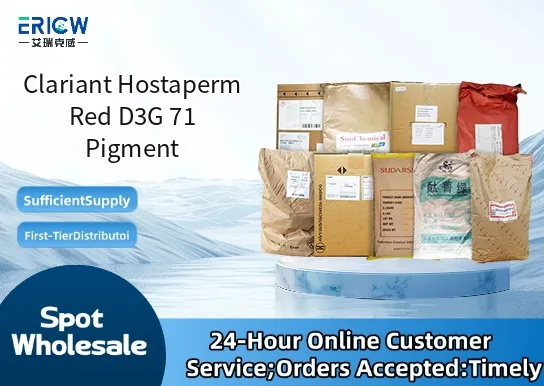
High chroma red shade with excellent brightness and clean hue.
Outstanding thermal stability suitable for high-temperature processing up to 280 °C.
Good lightfastness and weather resistance in demanding outdoor applications.
Excellent dispersibility in both polar and non-polar polymer systems.
Compliant with major global regulatory frameworks including EU REACH and US FDA 21 CFR for selected applications.
Polyolefin masterbatches (PP, PE) for automotive interior parts.
Engineering plastics including ABS, PS, and PC for consumer electronics housings.
Food-contact-compliant packaging films where regulatory approval is required.
Industrial coatings requiring high color strength and gloss retention.
Flexible PVC compounds for medical tubing and wire & cable sheathing.
| Chemical Type | Quinacridone derivative |
| Product Form | Free-flowing powder |
| Appearance | Red-violet crystalline powder |
| Primary Applications | Polyolefins, engineering plastics, coatings, flexible PVC |
| Key Features | High thermal stability, excellent dispersion, good lightfastness |
| Benefits | Consistent coloration, low dust generation, broad processability |
| Regulatory Status | EU REACH registered; compliant with FDA 21 CFR §178.3297 for indirect food contact |
Q1: What is the primary chemical class and pigment type of Hostaperm Red D3G 71?
A: Hostaperm Red D3G 71 is a high-performance perylene-based organic pigment, classified under the Pigment Red 179 (PR179) series. It exhibits excellent thermal stability and lightfastness, making it suitable for demanding polymer coloring applications.
Q2: In which polymer systems is this pigment most commonly used?
A: It is widely employed in engineering thermoplastics such as polyamide (PA), polybutylene terephthalate (PBT), and polyethylene terephthalate (PET), particularly where high-temperature processing and long-term color stability are required. It is also compatible with certain high-heat polyolefin compounds.
Q3: How does Hostaperm Red D3G 71 perform under high-shear and high-temperature compounding conditions?
A: This pigment demonstrates superior dispersion stability and resistance to thermal degradation during extrusion and injection molding, maintaining consistent hue and minimal color shift even at processing temperatures up to 300 °C in suitable polymer matrices.
Q4: Is Hostaperm Red D3G 71 suitable for food-contact or regulatory-sensitive applications?
A: While not inherently restricted, its suitability for food-contact applications depends on final formulation compliance and applicable regional regulations. Users must verify compatibility with relevant food-contact legislation through full system assessment and consultation with Clariant’s regulatory support team.
Q5: What is the typical dosage range when using this pigment in engineering plastics?
A: Dosage generally ranges from 0.1% to 2% by weight, depending on the desired shade intensity, polymer transparency requirements, and processing method. It is typically used at low concentrations due to its high tinctorial strength and excellent opacity.
Contact With Us:
E-mail: wangxingqiang@ericwchem.com
Have a Questions? Call Us:
Add:
Building A1, Jiete Industrial Park, Huangpu District, Guangzhou City, Guangdong Province, China