English
 Español
 tiếng việt
 русский
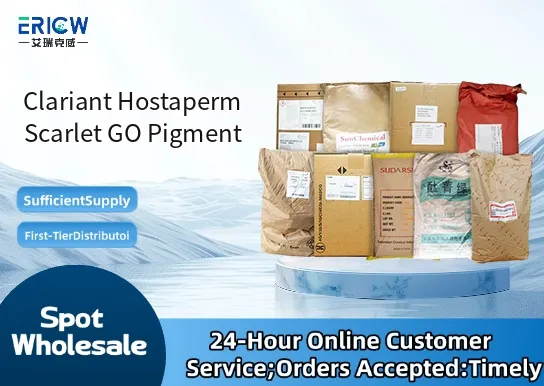
High chroma scarlet shade with excellent color strength and clean hue.
Outstanding thermal stability suitable for high-temperature processing up to 280 °C.
Good lightfastness and weather resistance in outdoor applications.
Excellent dispersibility in both polar and non-polar polymer systems.
Compliant with major global regulatory standards including EU REACH and US FDA 21 CFR for specific food-contact applications.
Polyolefin masterbatches (PP, PE) for automotive interior parts.
Engineering plastics including ABS, PS, and PC for consumer electronics housings.
Flexible and rigid PVC for building & construction profiles and cables.
High-performance inks for packaging gravure and flexographic printing.
Coating systems requiring vivid reds in automotive refinish and industrial finishes.
| Chemical Type | Quinacridone derivative (high-performance organic pigment) |
| Product Form | Free-flowing powder |
| Appearance | Scarlet-red powder with uniform particle size distribution |
| Primary Applications | Polymer coloring, high-end coatings, and specialty inks |
| Key Features | Thermal stability, lightfastness, dispersion efficiency |
| Benefits | Bright shade retention, low migration, consistent batch-to-batch performance |
| Regulatory Status | EU REACH registered; compliant with ISO 8124-3 for toy safety |
| Recommended Carrier | Standard polyolefin or styrenic carrier resins |
Q1: What is the primary chemical class of Hostaperm Scarlet GO?
A: Hostaperm Scarlet GO is a high-performance perylene-based organic pigment, offering excellent heat stability, lightfastness, and migration resistance in demanding polymer applications.
Q2: Is this pigment suitable for food-contact plastics?
A: Hostaperm Scarlet GO is designed for use in plastics intended for indirect food contact, subject to compliance with applicable regional regulatory frameworks and final formulation assessment by the compounder or converter.
Q3: Which polymers show optimal dispersion and color strength with this pigment?
A: It delivers outstanding performance in polyolefins (PP, PE), engineering thermoplastics (e.g., PA, PBT), and PVC, particularly where high thermal stability during processing is required.
Q4: How does Hostaperm Scarlet GO compare to conventional quinacridone reds in terms of weathering resistance?
A: Due to its perylene backbone, Hostaperm Scarlet GO provides superior long-term outdoor durability and UV resistance compared to many quinacridone-based alternatives, especially in unpigmented or lightly stabilized systems.
Q5: What is the typical dosage range in polymer masterbatches?
A: Dosage generally ranges from 0.1% to 2% by weight depending on the target shade depth, polymer matrix, and processing conditions—typical usage is at low concentrations to achieve strong tinting strength and cost efficiency.
Contact With Us:
E-mail: wangxingqiang@ericwchem.com
Have a Questions? Call Us:
Add:
Building A1, Jiete Industrial Park, Huangpu District, Guangzhou City, Guangdong Province, China