English
 Español
 tiếng việt
 русский
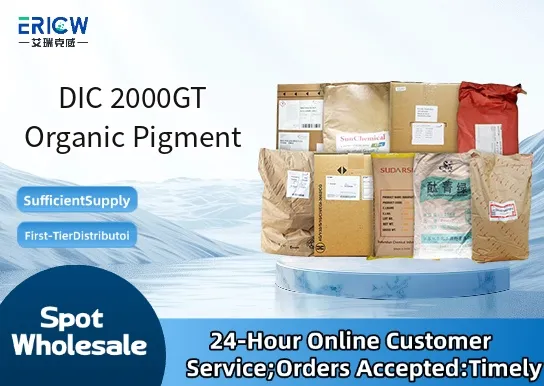
High chroma and excellent color strength for vivid, consistent hue reproduction.
Outstanding thermal stability up to 240°C, suitable for demanding processing conditions.
Good lightfastness (Grade 7–8 per ISO 105-B02) and weather resistance in outdoor applications.
Low volatility and minimal extractables, meeting stringent regulatory requirements for packaging inks.
Excellent dispersibility in both solvent-based and water-based systems without requiring high-shear stabilization.
Flexible packaging inks for food and pharmaceutical laminates.
Paper coating and gravure printing inks for premium labels and cartons.
Plastic masterbatches for polyolefin and PET applications.
Automotive interior coatings requiring low VOC and high durability.
Industrial coil coatings where gloss retention and color consistency are critical.
| Chemical Type | Quinacridone derivative |
| Product Form | Free-flowing dry powder |
| Appearance | Reddish-violet fine powder |
| Primary Applications | Printing inks, plastic colorants, industrial coatings |
| Key Features | High transparency, good migration resistance, non-halogenated |
| Benefits | Reduced formulation complexity, improved batch-to-batch consistency, REACH-compliant |
| Storage Conditions | Store in cool, dry place below 30°C; protect from moisture and direct sunlight |
Q1: What are the key performance advantages of DIC 2000GT compared to conventional organic pigments?
A: DIC 2000GT offers enhanced thermal stability and improved dispersion behavior in polymer melts, particularly beneficial for high-temperature processing such as injection molding and extrusion. Its molecular design supports superior color strength and reduced pigment agglomeration without requiring excessive dispersant load.
Q2: Is DIC 2000GT suitable for use in food-contact plastic applications?
A: DIC 2000GT is designed for general industrial coloring applications and is not pre-qualified for direct food-contact use under major regulatory frameworks. Customers intending food-contact use must conduct full regulatory assessment—including migration testing and compliance verification—based on their specific formulation, processing conditions, and target market requirements.
Q3: How should DIC 2000GT be incorporated into polyolefin compounds?
A: It is typically introduced via masterbatch preparation using standard compounding equipment. For optimal dispersion, pre-mixing with carrier resin prior to extrusion is recommended. Dosage depends on formulation requirements but generally ranges from 0.1% to 2% by weight in final compounds.
Q4: Does DIC 2000GT exhibit good lightfastness and weather resistance in outdoor applications?
A: Yes, DIC 2000GT demonstrates robust lightfastness and moderate UV resistance in stabilized polymeric systems. Performance in long-term outdoor exposure depends strongly on the host polymer matrix, UV stabilizer package, and processing history—comprehensive accelerated weathering tests are advised for critical applications.
Contact With Us:
E-mail: wangxingqiang@ericwchem.com
Have a Questions? Call Us:
Add:
Building A1, Jiete Industrial Park, Huangpu District, Guangzhou City, Guangdong Province, China