English
 Español
 tiếng việt
 русский
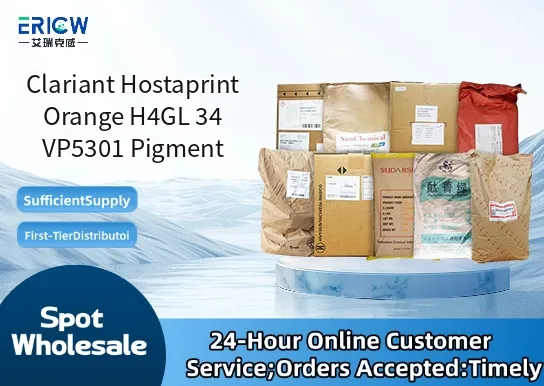
High chroma orange shade with excellent color strength and clean hue.
Outstanding thermal stability suitable for high-temperature processing up to 260 °C.
Good lightfastness (ISO 105-B02, Grade 7–8) and weather resistance in outdoor applications.
Low volatility and minimal extractables, meeting stringent regulatory requirements for packaging inks.
Optimized dispersibility in aqueous and solvent-based printing ink systems.
Flexible packaging inks for food and pharmaceutical laminates.
Publication gravure and flexographic inks on paper and film substrates.
Security and label inks requiring high color fidelity and batch-to-batch consistency.
Industrial coding and marking inks for durable product identification.
Decorative printing inks for consumer electronics and automotive interior trim.
| Chemical Type | Azo pigment (disazo) |
| Product Form | Free-flowing powder |
| Appearance | Orange-red free-flowing powder |
| Primary Applications | Printing inks (flexo, gravure, offset) |
| Key Features | High transparency, good dispersion, low migration |
| Regulatory Compliance | EU Directive 2002/72/EC compliant; non-food-contact grade unless specified |
| Particle Size (D50) | Approx. 0.08–0.12 µm |
| Heat Stability | Stable up to 260 °C (short-term) |
Q1: What is the primary application field for Hostaprint Orange H4GL 34 VP5301?
A: This pigment is specifically developed for use in high-performance gravure and flexographic inks for packaging applications, particularly where excellent lightfastness, heat stability, and solvent resistance are required.
Q2: Is Hostaprint Orange H4GL 34 VP5301 suitable for food-contact packaging inks?
A: Yes — it is formulated to meet regulatory expectations for indirect food contact applications when used in compliant ink systems, subject to final formulation validation and adherence to applicable regional requirements.
Q3: How does this pigment perform in aggressive solvent-based ink systems?
A: It demonstrates strong compatibility and dispersion stability in common packaging ink solvents including esters, ketones, and aromatic hydrocarbons, with minimal risk of flocculation or hue shift during storage and printing.
Q4: What is the typical dosage range for optimal color strength and print performance?
A: Dosage generally ranges from 0.1% to 2% by weight in the finished ink, depending on substrate, required opacity, and desired chroma — optimization is recommended via lab-scale trials.
Contact With Us:
E-mail: wangxingqiang@ericwchem.com
Have a Questions? Call Us:
Add:
Building A1, Jiete Industrial Park, Huangpu District, Guangzhou City, Guangdong Province, China