English
 Español
 tiếng việt
 русский
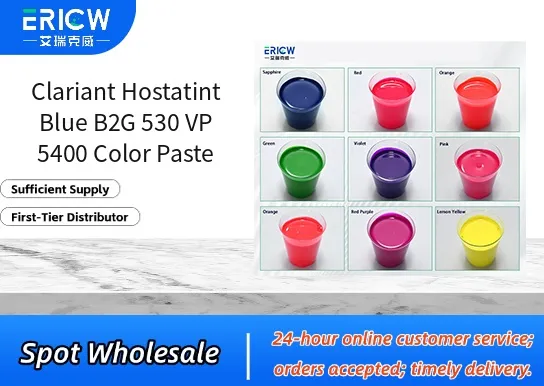
High chroma, clean blue shade with excellent batch-to-batch color consistency.
Optimized for high-shear dispersion in aqueous and solvent-based systems.
Good lightfastness and thermal stability up to 180 °C for short-term processing.
Low volatile organic compound (VOC) content, supporting sustainable formulation goals.
Compatible with common industrial binders including acrylics, vinyl acetate copolymers, and polyurethane dispersions.
Architectural coatings and interior wall paints.
Industrial maintenance coatings for metal and concrete substrates.
Automotive refinish coatings (non-OEM, low-bake applications).
Plastic masterbatches for extrusion and injection molding (PVC, ABS, PS).
Printing inks for packaging and label applications.
| Chemical Type | Organic pigment dispersion (C.I. Pigment Blue 15:3) |
| Product Form | Paste (liquid concentrate) |
| Appearance | Viscous, homogeneous blue paste |
| Primary Applications | Coatings, inks, plastics |
| Key Features | High tinctorial strength, good dispersibility, low dusting risk |
| Benefits | Reduced formulation complexity, improved color reproducibility, enhanced storage stability |
| pH Value (25 °C) | 7.0–8.5 |
| Storage Stability | ≥12 months at 5–30 °C in sealed original container |
Q1: What is the primary application area for Hostatint Blue B2G 530 VP 5400?
A: This color paste is specifically developed for coloring polyolefin-based plastics—especially polypropylene (PP) and polyethylene (PE)—in applications such as packaging films, containers, automotive interior components, and technical injection-molded parts where high thermal stability and dispersion performance are required.
Q2: Is this product suitable for food-contact applications?
A: Hostatint Blue B2G 530 VP 5400 is formulated with pigments and additives intended for use in plastics that may come into contact with food, subject to compliance with applicable regional regulatory frameworks. Final regulatory approval depends on the complete formulation, processing conditions, and end-use requirements—users must verify suitability with their regulatory team and relevant authorities.
Q3: How should this color paste be incorporated into polyolefin compounds?
A: It is typically introduced via masterbatch dilution or direct addition during compounding—using twin-screw extrusion or high-shear mixing. Good dispersion is achieved under standard polyolefin processing temperatures; pre-drying is generally not required, but storage under dry, cool conditions is recommended to maintain consistency.
Q4: What are the key handling and safety considerations?
A: As with all pigment pastes, avoid inhalation of dust from dried residues and minimize skin contact. Use appropriate personal protective equipment (PPE), including gloves and safety glasses, during handling. Refer to the Safety Data Sheet (SDS) for detailed toxicological and first-aid information—available upon request from Clariant or authorized distributors.
Contact With Us:
E-mail: wangxingqiang@ericwchem.com
Have a Questions? Call Us:
Add:
Building A1, Jiete Industrial Park, Huangpu District, Guangzhou City, Guangdong Province, China