English
 Español
 tiếng việt
 русский
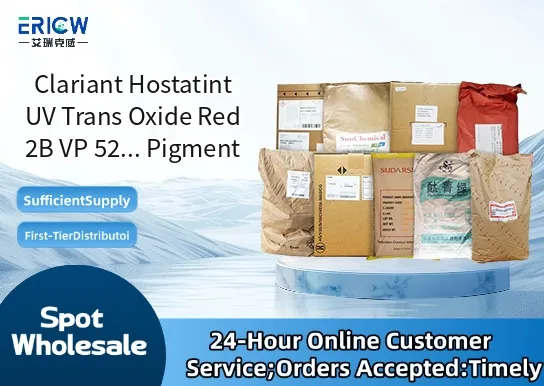
High UV transparency enabling vibrant, clean red shades in UV-curable systems.
Excellent thermal and chemical stability for demanding industrial coating processes.
Optimized particle size distribution for superior dispersion and gloss retention.
Low volatility and non-migrating behavior, ensuring long-term color consistency in final applications.
Compliant with major regulatory frameworks for industrial coatings and printing inks.
UV-curable offset and flexographic printing inks.
UV-curable decorative and functional coatings for plastics and metals.
High-performance screen inks for electronics and packaging substrates.
LED-UV and hybrid curing systems requiring low-absorption red pigments.
Specialty graphic arts inks where high chroma and lightfastness are critical.
| Chemical Type | Iron oxide-based organic-inorganic hybrid pigment |
| Product Form | Free-flowing powder |
| Appearance | Reddish-brown fine powder |
| Primary Applications | UV-curable inks and coatings |
| Key Features | UV-transparent, thermally stable, low migration |
| Benefits | Bright red hue, excellent dispersion, compatibility with acrylate resins |
| Storage Conditions | Store in cool, dry place; protect from moisture and direct sunlight |
| Regulatory Status | REACH registered; compliant with EU Directive 2009/148/EC (inhalation) |
Q1: What is the primary application field for Hostatint UV Trans Oxide Red 2B VP 52?
A: This pigment is specifically engineered for transparent or semi-transparent UV-curable systems, including inks, coatings, and overprint varnishes where high chroma, excellent lightfastness, and minimal UV absorption interference are required.
Q2: Is this pigment suitable for food-contact applications?
A: Hostatint UV Trans Oxide Red 2B VP 52 is not pre-qualified for direct food contact. Its use in such applications requires full regulatory assessment by the formulator, including compliance with applicable regional food-contact legislation and migration testing under actual end-use conditions.
Q3: How does this pigment perform under UV curing conditions?
A: It exhibits good compatibility with common UV-curable resin systems and photoinitiators, showing minimal impact on cure speed or final film properties when properly dispersed. Thermal stability during curing is maintained due to its inorganic oxide-based composition.
Q4: What dispersion guidance is recommended for optimal performance?
A: For best results, high-shear dispersion using appropriate media mills or bead mills is recommended. Pre-wetting with compatible monomers or oligomers helps achieve stable, fine-particle distributions essential for transparency and color strength in UV systems.
Contact With Us:
E-mail: wangxingqiang@ericwchem.com
Have a Questions? Call Us:
Add:
Building A1, Jiete Industrial Park, Huangpu District, Guangzhou City, Guangdong Province, China