English
 Español
 tiếng việt
 русский
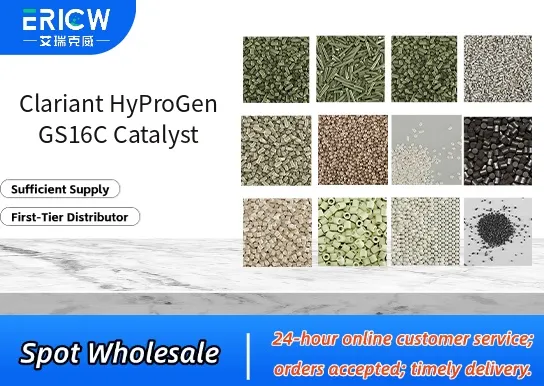
Highly selective hydrogenation catalyst optimized for saturated fatty acid methyl ester (FAME) production.
Thermally stable nickel-based formulation with controlled metal dispersion for consistent long-term performance.
Low dust generation and excellent mechanical strength to minimize attrition in fixed-bed reactors.
Pre-sulfided and ready-to-use, eliminating complex on-site activation procedures.
Designed for high space-time yield under moderate pressure and temperature conditions (typically 80–120 °C, 10–30 bar H₂).
Hydrogenation of unsaturated vegetable oils (e.g., soybean, sunflower, rapeseed oil) to produce hardened fats.
Production of fully saturated fatty acid methyl esters (FAME) for high-purity bio-based lubricants and plasticizers.
Refining of tall oil fatty acids (TOFA) in oleochemical processing plants.
Manufacture of food-grade stearic acid and palmitic acid via selective hydrogenation of tallow or palm oil derivatives.
| Chemical Type | Nickel-molybdenum sulfide on silica-alumina support |
| Product Form | Cylindrical extrudates (1.8–2.2 mm diameter) |
| Appearance | Black, free-flowing granular solid |
| Primary Applications | Hydrogenation of unsaturated triglycerides and fatty acid derivatives |
| Key Features | Pre-sulfided, low-temperature active, sulfur-tolerant |
| Benefits | Reduced reactor downtime, extended catalyst life, improved product consistency |
| Storage Requirement | Store under inert atmosphere (N₂) at ambient temperature; avoid moisture exposure |
Q1: What is the primary function of HyProGen GS16C in polyurethane systems?
A: HyProGen GS16C is a high-performance, non-tin, metal-free catalyst specifically designed to promote urethane bond formation (polyol–isocyanate reaction) with excellent selectivity and latency control, enabling improved processing windows and reduced post-cure requirements in flexible and semi-rigid foam applications.
Q2: How does HyProGen GS16C differ from traditional amine catalysts in terms of odor and volatility?
A: Unlike many conventional tertiary amine catalysts, HyProGen GS16C exhibits significantly lower volatility and minimal residual odor due to its tailored molecular structure and higher molecular weight, supporting improved workplace safety and compliance with stringent indoor air quality expectations for finished foam products.
Q3: Is HyProGen GS16C compatible with water-blown and low-emission polyurethane formulations?
A: Yes — HyProGen GS16C demonstrates broad compatibility with water-blown, low-VOC, and bio-based polyol systems, and it supports stable cream-to-gel timing without excessive gas evolution, making it suitable for modern sustainable foam manufacturing practices.
Q4: What handling and storage conditions are recommended for optimal performance?
A: Store in original sealed containers at temperatures between 5 °C and 30 °C, protected from moisture and direct sunlight. Avoid prolonged exposure to elevated temperatures or humidity, as this may affect catalytic activity over time. Always follow standard industrial chemical handling protocols.
Contact With Us:
E-mail: wangxingqiang@ericwchem.com
Have a Questions? Call Us:
Add:
Building A1, Jiete Industrial Park, Huangpu District, Guangzhou City, Guangdong Province, China