English
 Español
 tiếng việt
 русский
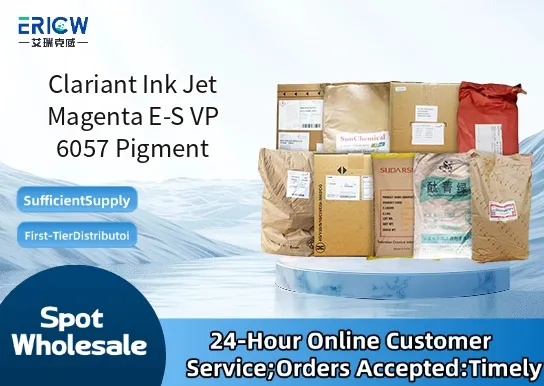
High chroma magenta shade optimized for wide-gamut inkjet color reproduction.
Excellent dispersion stability in aqueous pigment ink formulations.
Superior lightfastness and thermal stability for high-speed industrial printing.
Low viscosity impact, enabling high-solids ink formulations without compromising jetting reliability.
Designed for compatibility with common inkjet resin systems and dispersants.
Industrial inkjet textile printing (e.g., polyester, cotton blends).
Commercial and packaging digital printing (corrugated, flexible films).
Direct-to-garment (DTG) and direct-to-fabric (DTF) inks.
UV-curable and hybrid aqueous/UV inkjet systems.
High-resolution signage and décor printing on coated and uncoated substrates.
| Chemical Type | Organic pigment (quinacridone derivative) |
| Product Form | Aqueous pigment dispersion (liquid concentrate) |
| Appearance | Red-violet liquid with uniform consistency |
| Primary Applications | Aqueous-based inkjet inks for industrial and textile printing |
| Key Features | High color strength, narrow particle size distribution, low ionic content |
| Benefits | Enhanced print durability, reduced nozzle clogging, improved color consistency across print runs |
| pH Range (as supplied) | 7.5 – 8.5 |
| Storage Stability | ≥12 months at 5–30 °C, non-freezing |
Q1: What is the primary application of Clariant Ink Jet Magenta E-S VP 6057 Pigment?
A: This pigment is specifically engineered for aqueous inkjet inks used in industrial digital printing applications, including packaging, labels, and decorative substrates requiring high chroma, good lightfastness, and reliable jetting stability.
Q2: Is this pigment supplied as a dry powder or a pre-dispersed paste?
A: Clariant Ink Jet Magenta E-S VP 6057 is supplied as a stabilized aqueous pigment dispersion — not a dry powder — designed to simplify integration into ink formulations and minimize dispersion-related variability.
Q3: How does this pigment perform in terms of thermal and shear stability during inkjet printhead operation?
A: The pigment dispersion exhibits robust thermal and mechanical stability under typical inkjet processing conditions, supporting consistent droplet formation and reduced risk of nozzle clogging in piezoelectric and thermal printheads.
Q4: Can this pigment be used in food-contact printing applications?
A: While the pigment itself is not inherently prohibited for food-contact use, its suitability depends on full formulation compliance with applicable regional regulations. Customers must conduct final migration testing and regulatory assessment of the complete ink system.
Q5: What is the typical dosage range when formulating aqueous inkjet inks with this pigment?
A: Dosage typically ranges from 0.1% to 2% by weight in the finished ink, depending on desired optical density, substrate type, and print process requirements. Optimization is recommended during ink development.
Contact With Us:
E-mail: wangxingqiang@ericwchem.com
Have a Questions? Call Us:
Add:
Building A1, Jiete Industrial Park, Huangpu District, Guangzhou City, Guangdong Province, China