English
 Español
 tiếng việt
 русский
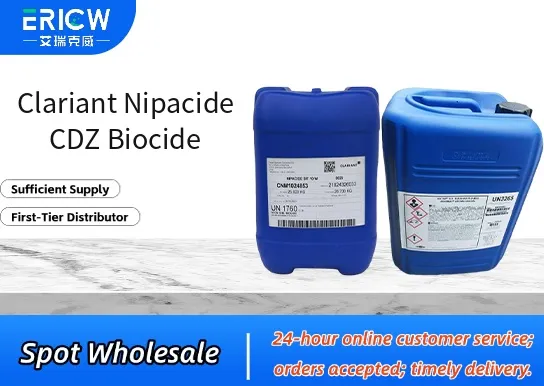
Broad-spectrum efficacy against bacteria, fungi, and algae in aqueous systems.
Low-toxicity profile with favorable environmental and regulatory acceptance (e.g., compliant with EU BPR requirements).
Stable across a wide pH range (pH 4–10), ensuring consistent performance in diverse process conditions.
Non-oxidizing chemistry, minimizing corrosion risk to metal components and compatibility with common polymers.
Easy dosing and rapid biocidal action, enabling effective control with low treatment concentrations.
Industrial cooling water systems for power plants and manufacturing facilities.
Process water circuits in paper & board mills and pulp processing.
Recirculating water in HVAC systems and closed-loop heat exchange units.
Emulsion-based metalworking fluids and cutting oils.
Preservation of water-based coatings, adhesives, and construction chemicals.
| Chemical Type | Isothiazolinone-based biocide (mixture of 5-chloro-2-methyl-4-isothiazolin-3-one and 2-methyl-4-isothiazolin-3-one) |
| Product Form | Aqueous solution |
| Appearance | Clear, colorless to pale yellow liquid |
| pH (1% solution, 20°C) | 2.5–4.5 |
| Density (20°C) | 1.02–1.06 g/cm³ |
| Solubility | Completely miscible with water |
| Primary Applications | Non-oxidizing biocide for industrial water treatment and preservation of water-based formulations |
| Key Features | Fast-acting, broad-spectrum, low-dose efficiency, thermal and hydrolytic stability |
Q1: What is the primary mode of action of Nipacide CDZ Biocide?
A: Nipacide CDZ Biocide functions primarily through the controlled release of formaldehyde, which disrupts essential cellular processes in microorganisms—including protein denaturation and nucleic acid cross-linking—leading to rapid biocidal activity against bacteria, yeasts, and molds.
Q2: In which types of industrial formulations is Nipacide CDZ most commonly used?
A: It is widely applied in water-based industrial products such as metalworking fluids, latex paints, adhesives, sealants, construction chemicals, and cleaning concentrates—particularly where long-term preservation against microbial spoilage is required during storage and use.
Q3: How does pH affect the performance and stability of Nipacide CDZ?
A: Nipacide CDZ exhibits optimal stability and controlled formaldehyde release in mildly acidic to neutral pH ranges (approximately pH 4–7). Performance may decline significantly under strongly alkaline conditions due to accelerated decomposition and reduced biocidal efficacy.
Q4: Is Nipacide CDZ compatible with common surfactants and thickeners used in industrial formulations?
A: Yes, it demonstrates broad compatibility with nonionic and anionic surfactants, cellulose ethers, associative thickeners, and many common formulation additives—though compatibility testing under actual use conditions is recommended to confirm stability and efficacy.
Q5: What safety and handling considerations apply when using Nipacide CDZ?
A: As a formaldehyde-releasing biocide, appropriate occupational hygiene measures must be followed—including adequate ventilation, personal protective equipment (e.g., gloves and eye protection), and adherence to local exposure limits for formaldehyde. Users should consult the Safety Data Sheet (SDS) for detailed handling, storage, and disposal guidance.
Contact With Us:
E-mail: wangxingqiang@ericwchem.com
Have a Questions? Call Us:
Add:
Building A1, Jiete Industrial Park, Huangpu District, Guangzhou City, Guangdong Province, China