English
 Español
 tiếng việt
 русский
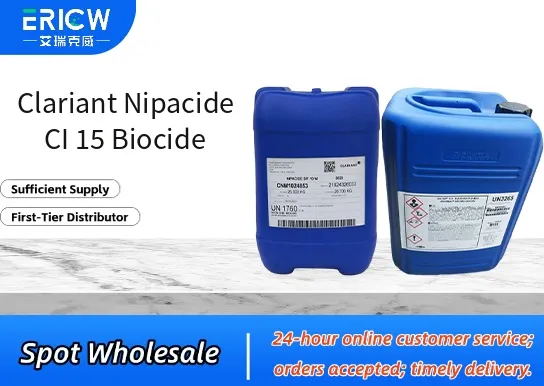
Broad-spectrum efficacy against bacteria, fungi, and algae in industrial water systems.
Low-toxicity formulation compliant with major global regulatory frameworks including EU BPR and US EPA guidelines.
Excellent stability across a wide pH range (pH 4–10) and in the presence of common water treatment additives.
Non-oxidizing chemistry that minimizes corrosion risk to ferrous and non-ferrous metals.
Compatible with anionic, nonionic, and cationic surfactants, enabling flexible integration into complex formulations.
Cooling water systems in power generation and HVAC installations.
Process water circuits in pulp and paper manufacturing.
Recirculating water systems in metalworking fluid applications.
Preservation of water-based industrial coatings and adhesives during storage.
Control of microbial growth in closed-loop geothermal and district heating systems.
| Chemical Type | Isothiazolinone-based biocide blend |
| Product Form | Aqueous solution |
| Appearance | Clear, light yellow liquid |
| pH (1% aqueous solution) | 3.0–4.5 |
| Density (20°C) | 1.08–1.12 g/cm³ |
| Solubility in Water | Completely miscible |
| Primary Applications | Industrial water treatment, preservation of water-based formulations |
| Key Features | Non-oxidizing, low volatility, low aquatic toxicity profile |
Q1: What is the primary mode of action of Nipacide CI 15?
A: Nipacide CI 15 is a broad-spectrum, non-oxidizing biocide based on an isothiazolone chemistry. It acts by inhibiting key enzymatic processes in microorganisms, leading to rapid disruption of cellular metabolism and cell death in bacteria, fungi, and algae.
Q2: In which types of industrial systems is Nipacide CI 15 typically applied?
A: It is widely used in water-based industrial formulations such as metalworking fluids, latex paints and coatings, adhesives, construction chemicals, and polymer emulsions—where long-term microbial stability and low odor are critical performance requirements.
Q3: How does Nipacide CI 15 perform under varying pH and temperature conditions?
A: Nipacide CI 15 demonstrates good stability across a broad pH range (approximately pH 4–10) and maintains efficacy at typical ambient and moderate process temperatures. Performance may diminish under strongly alkaline conditions or prolonged exposure to elevated temperatures above 60 °C.
Q4: Is Nipacide CI 15 compatible with common formulation ingredients?
A: Yes—it exhibits broad compatibility with surfactants, thickeners, defoamers, and other biocides commonly used in industrial formulations. However, compatibility testing is recommended for each specific system due to potential interactions with reducing agents or highly reactive components.
Q5: What safety and handling considerations apply to Nipacide CI 15?
A: As with all isothiazolone-based biocides, appropriate personal protective equipment (PPE) including gloves and eye protection should be worn during handling. It is classified as a skin and eye irritant; safe use requires adherence to the Safety Data Sheet (SDS) and local occupational health and safety regulations.
Contact With Us:
E-mail: wangxingqiang@ericwchem.com
Have a Questions? Call Us:
Add:
Building A1, Jiete Industrial Park, Huangpu District, Guangzhou City, Guangdong Province, China