English
 Español
 tiếng việt
 русский
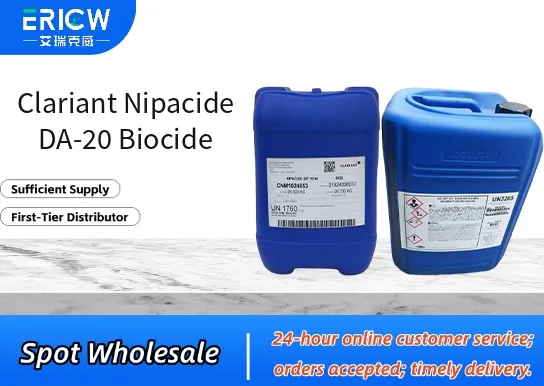
Broad-spectrum antimicrobial activity against bacteria, fungi, and algae.
Excellent stability in water-based systems across a wide pH range (pH 4–10).
Low volatility and minimal odor, supporting safe handling and operator acceptance.
Compatible with common surfactants, thickeners, and other formulation ingredients.
Non-oxidizing mode of action, reducing risk of corrosion in metal-containing systems.
Preservation of water-based industrial coatings and architectural paints.
Microbial control in adhesives and sealants during storage and application.
Protection of pigment dispersions and colorant concentrates.
Stabilization of water-miscible metalworking fluids.
Preservation of construction chemicals including grouts, mortars, and tile adhesives.
| Chemical Type | Isothiazolinone-based biocide blend |
| Product Form | Aqueous solution |
| Appearance | Clear, pale yellow liquid |
| pH (1% aqueous solution) | 6.5–8.5 |
| Density (20 °C) | 1.05–1.10 g/cm³ |
| Solubility | Completely miscible with water |
| Primary Applications | Preservative for water-based industrial formulations |
| Key Features | Broad-spectrum, non-oxidizing, low-odor, formulation-stable |
Q1: What is the primary mode of action of Nipacide DA-20?
A: Nipacide DA-20 is a broad-spectrum, water-soluble biocide based on an isothiazolone chemistry. It acts by disrupting essential cellular functions in microorganisms—including inhibition of key enzyme systems and interference with energy metabolism—leading to rapid microbial cell death.
Q2: In which types of industrial formulations is Nipacide DA-20 commonly used?
A: It is widely applied in water-based industrial products such as metalworking fluids, latex paints and coatings, adhesives, construction chemicals, and cleaning solutions—particularly where long-term preservation against bacteria, fungi, and algae is required under challenging pH and temperature conditions.
Q3: How stable is Nipacide DA-20 in formulated systems?
A: Nipacide DA-20 demonstrates excellent stability across a broad pH range (typically pH 2–12) and maintains efficacy in the presence of common formulation components, including surfactants, thickeners, and glycols. Its performance remains robust during extended storage and under typical processing conditions.
Q4: Is Nipacide DA-20 compatible with other common preservatives?
A: Yes, Nipacide DA-20 is frequently used in combination with complementary biocides—such as formaldehyde releasers or benzisothiazolinone—to broaden antimicrobial spectrum and enhance preservation efficacy, especially in complex or high-risk formulations.
Q5: What safety and handling considerations apply to Nipacide DA-20?
A: As with all isothiazolone-based biocides, appropriate personal protective equipment (PPE) should be used during handling. The product is classified as skin and eye irritant; safe use requires adherence to the Safety Data Sheet (SDS), proper ventilation, and avoidance of direct contact. Regulatory compliance must be verified per regional requirements prior to commercial use.
Contact With Us:
E-mail: wangxingqiang@ericwchem.com
Have a Questions? Call Us:
Add:
Building A1, Jiete Industrial Park, Huangpu District, Guangzhou City, Guangdong Province, China