English
 Español
 tiếng việt
 русский
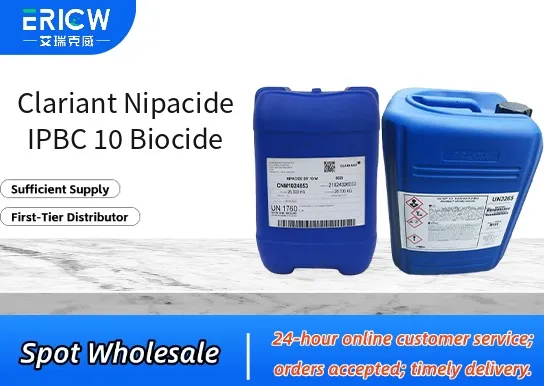
Broad-spectrum efficacy against bacteria, fungi, and algae in water-based systems.
Low volatility and excellent hydrolytic stability under neutral to mildly alkaline conditions.
Compatible with common thickeners, surfactants, and co-biocides such as BIT and MIT.
Non-oxidizing mode of action, minimizing corrosion risk in metal-containing formulations.
Approved for use in industrial applications compliant with EU BPR and US EPA regulations (when used per label).
Preservation of architectural and decorative waterborne paints and coatings.
Protection of water-based adhesives and sealants during storage and application.
Microbial control in pigment dispersions and colorant concentrates.
Stabilization of construction chemicals including grouts, mortars, and tile adhesives.
Preservation of industrial cleaning formulations and metalworking fluid concentrates.
| Chemical Type | Iodopropynyl butylcarbamate (IPBC), 10% active in propylene glycol/water carrier |
| Product Form | Liquid |
| Appearance | Pale yellow to amber clear liquid |
| pH (1% aqueous solution) | 6.0 – 8.0 |
| Density (20 °C) | 1.04 – 1.08 g/cm³ |
| Solubility | Miscible with water, glycols, and common organic solvents |
| Storage Stability | ≥24 months at 5–25 °C in original unopened container |
| Primary Applications | Paints & coatings, adhesives, construction chemicals, colorants |
Q1: What is the primary mode of action of Nipacide IPBC 10?
A: Nipacide IPBC 10 acts primarily through inhibition of essential enzymatic processes in microorganisms, disrupting cell membrane integrity and interfering with energy metabolism—leading to effective control of bacteria, yeasts, and molds.
Q2: In which types of formulations is Nipacide IPBC 10 most commonly used?
A: It is widely applied in water-based industrial formulations such as architectural coatings, adhesives, sealants, construction chemicals, and textile auxiliaries—particularly where long-term preservation against microbial spoilage is required during storage and in-service use.
Q3: Is Nipacide IPBC 10 compatible with common preservative boosters or synergists?
A: Yes, it demonstrates good compatibility with several complementary biocides—including isothiazolinones and benzisothiazolinone—and is often used in combination systems to broaden the antimicrobial spectrum and enhance stability under varying pH and temperature conditions.
Q4: How should Nipacide IPBC 10 be incorporated into a formulation?
A: It is typically added during the final stage of manufacturing, after cooling and pH adjustment, to minimize thermal degradation and ensure optimal dispersion. Dosage depends on formulation requirements but generally ranges from 0.1% to 2% by weight of the total formulation.
Q5: Does Nipacide IPBC 10 offer protection against both Gram-positive and Gram-negative bacteria?
A: Yes, it exhibits broad-spectrum activity against a wide range of bacteria—including both Gram-positive and Gram-negative strains—as well as fungi, making it suitable for applications requiring robust, multi-target microbial control.
Contact With Us:
E-mail: wangxingqiang@ericwchem.com
Have a Questions? Call Us:
Add:
Building A1, Jiete Industrial Park, Huangpu District, Guangzhou City, Guangdong Province, China