English
 Español
 tiếng việt
 русский
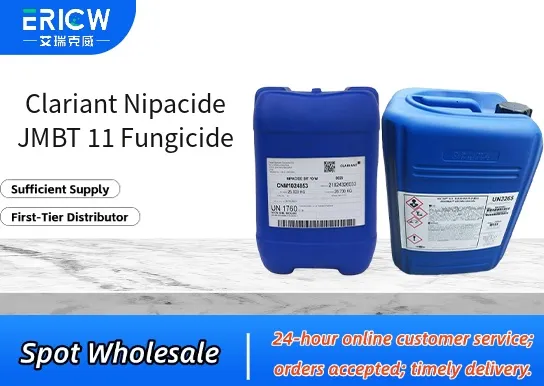
Highly effective broad-spectrum biocide against bacteria, fungi, and algae.
Stable across a wide pH range (pH 4–10), ensuring compatibility in diverse formulations.
Low volatility and excellent hydrolytic stability for extended shelf life and in-system performance.
Compatible with common water treatment polymers, surfactants, and other industrial additives.
Non-oxidizing mode of action, minimizing corrosion risk to metal surfaces and equipment.
Industrial cooling water systems (open and closed loops).
Process water circuits in paper, textile, and food & beverage manufacturing.
Emulsion polymerization reactors and latex storage tanks.
Oilfield water injection systems and hydraulic fracturing fluids.
Paints, coatings, adhesives, and construction chemical formulations.
| Chemical Type | Thiabendazole derivative (2-(thiocarbamoylamino)benzothiazole) |
| Product Form | Free-flowing white to off-white granular solid |
| Appearance | Crystalline granules, free from visible impurities |
| Primary Applications | Non-oxidizing biocide for industrial water and polymer systems |
| Key Features | Broad-spectrum antimicrobial activity, low odor, thermal stability |
| Benefits | Reduced biofilm formation, extended system uptime, minimal impact on formulation viscosity |
| Solubility | Slightly soluble in water; readily dispersible in polar organic solvents |
| Storage Conditions | Store in cool, dry place below 30 °C, away from strong oxidizers |
Q1: What is the primary mode of action of Nipacide JMBT 11?
A: Nipacide JMBT 11 functions as a broad-spectrum fungistatic agent, primarily inhibiting fungal growth by interfering with key enzymatic processes essential for cell metabolism and reproduction. Its active ingredient, 2-mercaptobenzothiazole (MBT), exhibits strong affinity for metal ions in microbial enzymes, disrupting their function.
Q2: In which types of industrial formulations is Nipacide JMBT 11 typically used?
A: It is commonly incorporated into water-based industrial systems such as metalworking fluids, latex emulsions, adhesives, paints and coatings, and polymer dispersions—where long-term protection against mold, yeast, and bacteria is required during storage and use.
Q3: Is Nipacide JMBT 11 compatible with common biocides used in preservation systems?
A: Yes, Nipacide JMBT 11 often shows good compatibility with isothiazolinones, formaldehyde donors, and other heterocyclic biocides, enabling synergistic combinations for enhanced spectrum and stability. Compatibility testing under actual formulation conditions is recommended prior to full-scale implementation.
Q4: How should Nipacide JMBT 11 be handled and dosed in formulations?
A: It is typically added during the cool-down phase of formulation preparation to avoid thermal degradation. Dosage depends on formulation requirements and challenge level but generally ranges from 0.1% to 2% by weight. Handling requires appropriate personal protective equipment due to its potential skin sensitization properties.
Contact With Us:
E-mail: wangxingqiang@ericwchem.com
Have a Questions? Call Us:
Add:
Building A1, Jiete Industrial Park, Huangpu District, Guangzhou City, Guangdong Province, China