English
 Español
 tiếng việt
 русский
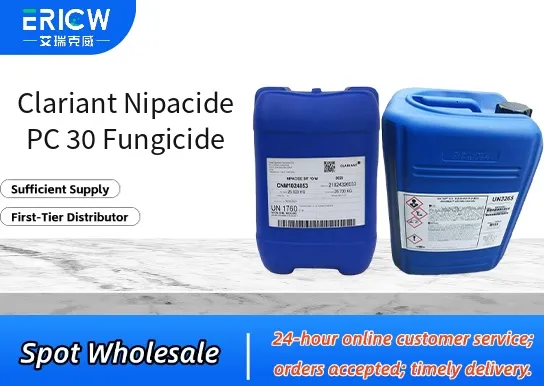
Broad-spectrum fungicidal activity against key spoilage microorganisms including molds, yeasts, and bacteria.
Stable and effective across a wide pH range (pH 4–10), ensuring compatibility with diverse industrial formulations.
Low volatility and excellent thermal stability, supporting use in high-temperature processing environments.
Non-oxidizing chemistry, minimizing risk of corrosion to metal components and compatibility issues with sensitive additives.
Designed for low-dose efficacy, enabling cost-effective preservation without compromising product performance or aesthetics.
Water-based paints and coatings for architectural and industrial applications.
Adhesives and sealants, particularly latex-based and acrylic systems.
Construction chemicals including mortars, grouts, and tile adhesives.
Industrial cleaning formulations and liquid detergents.
Printing inks and pigment dispersions requiring long-term microbial stability.
| Chemical Type | Isothiazolinone-based preservative blend |
| Product Form | Clear to slightly hazy aqueous solution |
| Appearance | Colorless to pale yellow liquid |
| pH (1% aqueous solution) | 3.5 – 5.5 |
| Density (20 °C) | 1.08 – 1.12 g/cm³ |
| Solubility | Completely miscible with water and common polar organic solvents |
| Primary Applications | Preservation of water-based industrial formulations |
| Key Features | Broad-spectrum biocide, non-oxidizing, low odor, low volatility |
Q1: What types of microorganisms does Nipacide PC 30 effectively control?
A: Nipacide PC 30 is a broad-spectrum fungicide designed to inhibit the growth of common spoilage fungi, yeasts, and bacteria in water-based industrial systems—particularly where microbial degradation compromises product stability or performance.
Q2: In which industrial applications is Nipacide PC 30 typically used?
A: It is commonly incorporated into water-based coatings, adhesives, construction chemicals, and metalworking fluids to prevent microbial contamination during storage and in-service use—especially in formulations prone to fungal bloom or souring under warm, humid conditions.
Q3: How should Nipacide PC 30 be added to a formulation?
A: It is recommended to add Nipacide PC 30 during the final stage of manufacturing, after pH adjustment and cooling, to ensure optimal stability and compatibility. Pre-dilution with water or a compatible solvent may facilitate uniform dispersion, particularly in viscous systems.
Q4: Is Nipacide PC 30 compatible with common preservative boosters or other biocides?
A: Yes, Nipacide PC 30 often exhibits synergistic activity when combined with isothiazolinones or formaldehyde-releasers in multi-active preservation strategies—though compatibility testing under actual formulation conditions is always advised prior to full-scale implementation.
Q5: What safety and handling precautions should be observed?
A: As with all industrial biocides, appropriate personal protective equipment—including gloves and eye protection—should be worn during handling. Avoid inhalation of mists or prolonged skin contact. Full safety information is provided in the Safety Data Sheet (SDS), which must be consulted before use.
Contact With Us:
E-mail: wangxingqiang@ericwchem.com
Have a Questions? Call Us:
Add:
Building A1, Jiete Industrial Park, Huangpu District, Guangzhou City, Guangdong Province, China