English
 Español
 tiếng việt
 русский
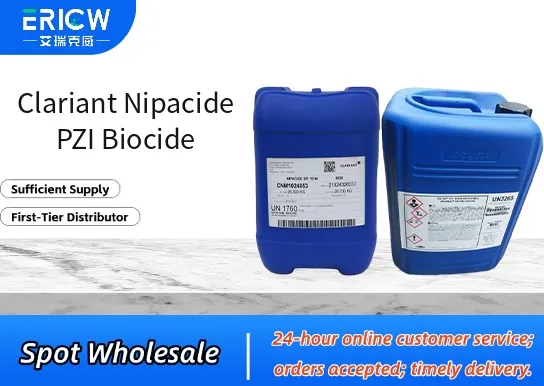
Highly effective broad-spectrum biocide against bacteria, fungi, and algae.
Stable across a wide pH range (pH 4–10), ensuring consistent performance in diverse process conditions.
Low toxicity profile with favorable environmental and regulatory acceptance (e.g., compliant with EU BPR requirements).
Compatible with common water treatment additives including corrosion inhibitors and dispersants.
Non-oxidizing chemistry, minimizing material compatibility concerns in metal and polymer systems.
Cooling water systems in industrial HVAC and power generation facilities.
Process water circuits in paper and pulp manufacturing.
Recirculating water systems in oil & gas production and refining operations.
Preservation of water-based emulsions, coatings, and adhesives during storage.
Control of microbial growth in closed-loop industrial water systems.
| Chemical Type | Isothiazolinone-based biocide blend |
| Product Form | Liquid concentrate |
| Appearance | Clear, pale yellow to amber liquid |
| Primary Applications | Industrial water treatment, preservation of water-based formulations |
| Key Features | Broad-spectrum efficacy, pH stability, non-oxidizing |
| Benefits | Reduced biofilm formation, extended system run time, low dosing requirement |
| Storage Stability | ≥24 months at 5–30 °C in original sealed container |
| Recommended Dosage Range | 50–200 ppm active ingredient (system-dependent) |
Q1: What is the primary mode of action of Nipacide PZI Biocide?
A: Nipacide PZI Biocide functions as a broad-spectrum preservative through controlled release of active isothiazolone derivatives, which disrupt microbial cell membrane integrity and inhibit essential enzymatic activity in bacteria, yeasts, and molds.
Q2: In which types of industrial formulations is Nipacide PZI Biocide commonly used?
A: It is widely applied in water-based industrial products such as metalworking fluids, latex paints, adhesives, construction chemicals, and cleaning concentrates—particularly where long-term microbial stability and compatibility with anionic and nonionic systems are required.
Q3: How does Nipacide PZI Biocide compare to other isothiazolone-based biocides in terms of stability and pH range?
A: Nipacide PZI Biocide offers enhanced hydrolytic stability under mildly acidic to neutral conditions (pH 4–8), maintaining efficacy over extended storage periods. Its formulation provides improved compatibility with common thickeners and surfactants compared to some conventional isothiazolone blends.
Q4: Is Nipacide PZI Biocide suitable for use in low-VOC or high-solids formulations?
A: Yes—it is formulated to support modern formulation trends, including low-VOC systems and high-solids applications, due to its low volatility and minimal impact on rheology or film formation when dosed appropriately.
Contact With Us:
E-mail: wangxingqiang@ericwchem.com
Have a Questions? Call Us:
Add:
Building A1, Jiete Industrial Park, Huangpu District, Guangzhou City, Guangdong Province, China