English
 Español
 tiếng việt
 русский
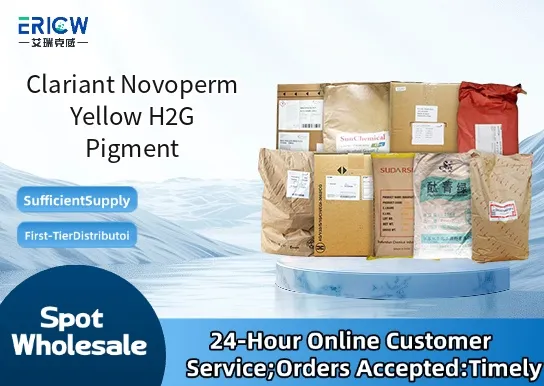
High chroma and excellent lightfastness in demanding outdoor applications.
Outstanding heat stability suitable for high-temperature processing up to 260 °C.
Good dispersibility in both solvent-based and water-based systems.
Excellent resistance to migration and blooming in plastic and ink formulations.
Compliant with major global regulatory frameworks including REACH and RoHS.
Automotive coatings requiring long-term color retention and weather resistance.
Engineering plastics such as polyolefins, ABS, and polycarbonate.
Industrial coil coatings exposed to UV and thermal stress.
Packaging inks for food-contact compliant flexible films and laminates.
High-performance gravure and flexographic printing inks.
| Chemical Type | Disazo pigment (C.I. Pigment Yellow 154) |
| Product Form | Fine powder |
| Appearance | Bright greenish-yellow powder |
| Primary Applications | Plastics, coatings, and printing inks |
| Key Features | High transparency, good tinctorial strength, low volatility |
| Benefits | Enhanced color consistency, reduced formulation variability, improved processability |
| Regulatory Status | REACH registered; non-hazardous per GHS classification |
Q1: What is the primary chemical class of Novoperm Yellow H2G?
A: Novoperm Yellow H2G is a high-performance perylene-based organic pigment, belonging to the perylene tetracarboxylic diimide (PTCDI) family, known for exceptional thermal stability, lightfastness, and weather resistance.
Q2: Is Novoperm Yellow H2G suitable for use in food-contact plastics?
A: While Novoperm Yellow H2G is not inherently restricted for food-contact applications, its suitability depends on final regulatory approval within the specific polymer matrix, processing conditions, and end-use jurisdiction. It is commonly evaluated in polyolefins and engineering thermoplastics where high thermal stability is required.
Q3: How does Novoperm Yellow H2G perform under high-temperature processing?
A: This pigment exhibits excellent thermal stability and is routinely processed in polymers such as polypropylene, polyethylene, and engineering resins at temperatures up to 300 °C without significant decomposition or hue shift, making it well-suited for demanding extrusion and injection molding applications.
Q4: What dispersion characteristics should be expected during compounding?
A: Novoperm Yellow H2G typically requires robust dispersion energy due to its high crystallinity and strong intermolecular forces. Optimal results are achieved using high-shear compounding equipment and compatible dispersants—dosage depends on formulation requirements but generally ranges from 0.1% to 2% by weight relative to pigment loading.
Contact With Us:
E-mail: wangxingqiang@ericwchem.com
Have a Questions? Call Us:
Add:
Building A1, Jiete Industrial Park, Huangpu District, Guangzhou City, Guangdong Province, China