English
 Español
 tiếng việt
 русский
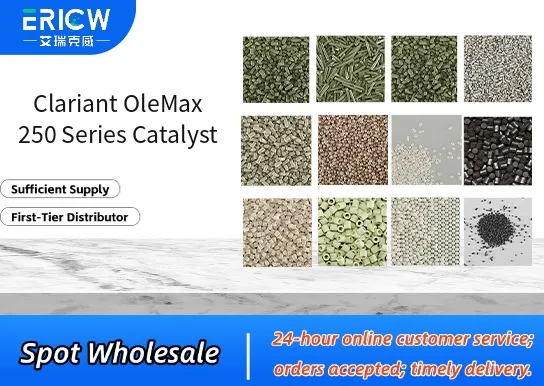
Highly selective for linear alpha olefin (LAO) production via ethylene oligomerization.
Thermally stable under industrial fixed-bed or slurry-phase reactor conditions.
Low heavy-end formation, minimizing downstream separation burden and improving process efficiency.
Consistent activity and selectivity over extended on-stream operation cycles.
Designed for compatibility with standard hydrocarbon-based carrier systems and regeneration protocols.
Production of C4–C10 linear alpha olefins for plasticizer alcohols.
Synthesis of detergent-range olefins (C12–C18) for LAB (linear alkylbenzene) manufacturing.
Co-catalyst support in integrated ethylene conversion units for polyolefin feedstock optimization.
On-purpose LAO supply for high-purity synthetic lubricant base stocks.
Flexible integration into existing oligomerization platforms with minimal retrofit requirements.
| Chemical Type | Ni-based heterogeneous catalyst with proprietary ligand stabilization |
| Product Form | Free-flowing granular solid |
| Appearance | Gray to dark brown spherical granules |
| Primary Applications | Ethylene oligomerization to linear alpha olefins (C4–C18) |
| Key Features | High LAO selectivity, low methane/ethane byproduct formation |
| Benefits | Reduced energy consumption per ton of LAO, extended catalyst cycle life |
| Handling Recommendation | Air-sensitive; supplied under inert nitrogen atmosphere |
| Storage Condition | Store at ambient temperature in sealed containers, protected from moisture |
Q1: What is the primary function of the OleMax 250 Series in polyolefin production?
A: The OleMax 250 Series is a high-activity Ziegler–Natta catalyst system designed to support the polymerization of propylene and ethylene–propylene copolymers, delivering excellent stereoregularity, broad molecular weight distribution, and consistent particle morphology.
Q2: How does OleMax 250 differ from earlier-generation Clariant polypropylene catalysts?
A: Compared to prior generations, OleMax 250 offers improved hydrogen response, enhanced comonomer incorporation efficiency, and greater robustness toward common process impurities—enabling more stable reactor operation and broader formulation flexibility without requiring major hardware modifications.
Q3: Is OleMax 250 compatible with conventional slurry, bulk, or gas-phase polypropylene processes?
A: Yes—OleMax 250 is engineered for compatibility across all major polypropylene manufacturing technologies, including loop slurry, bulk (bulk + gas-phase), and gas-phase reactors. Its controlled activity profile and low fines generation support reliable scale-up and long-term catalyst bed stability.
Q4: What are typical handling and storage recommendations for OleMax 250?
A: OleMax 250 should be stored under inert atmosphere (e.g., nitrogen or argon) at room temperature in sealed containers. It is sensitive to moisture and oxygen; therefore, handling requires strict adherence to standard organometallic catalyst protocols—including use of glove boxes or purged transfer systems—to preserve activity and consistency.
Q5: How is dosage typically determined for OleMax 250 in commercial-scale polymerization?
A: Dosage is formulation- and process-specific, but it is generally used at low concentrations relative to monomer feed. Typical catalyst loading ranges from 0.1% to 2% by weight of total solid catalyst system, depending on desired polymer properties, target productivity, and reactor configuration.
Contact With Us:
E-mail: wangxingqiang@ericwchem.com
Have a Questions? Call Us:
Add:
Building A1, Jiete Industrial Park, Huangpu District, Guangzhou City, Guangdong Province, China