English
 Español
 tiếng việt
 русский
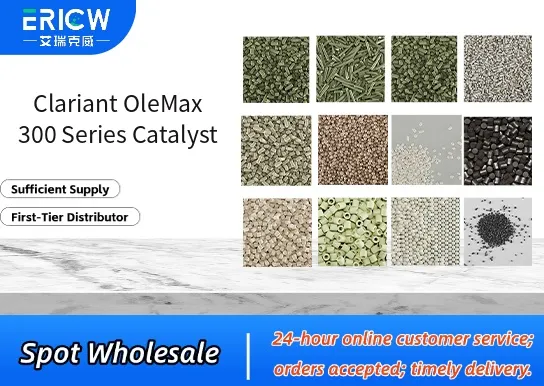
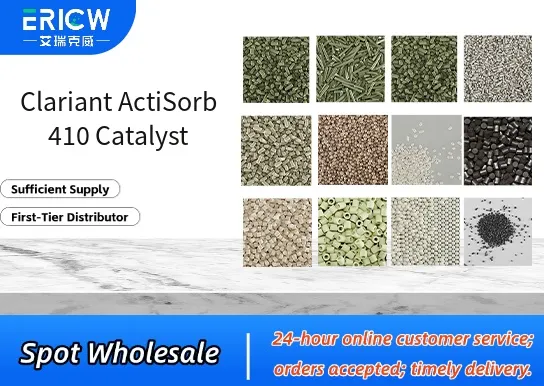
High thermal stability enabling reliable performance under demanding exothermic reaction conditions.
Optimized platinum-group metal (PGM) composition for enhanced activity and extended catalyst lifetime.
Controlled pore structure and high surface area to maximize active site accessibility and mass transfer efficiency.
Robust mechanical integrity with low attrition rate, ensuring consistent performance in fixed-bed and trickle-bed reactors.
Customizable formulation options to meet specific feedstock impurity tolerance and selectivity requirements.
Hydrodesulfurization (HDS) of middle distillates in petroleum refining.
Hydrodenitrogenation (HDN) in diesel and jet fuel upgrading processes.
Selective hydrogenation of unsaturated compounds in fine chemical synthesis.
Clean fuel production compliant with ultra-low sulfur diesel (ULSD) specifications.
Renewable diesel hydrotreating using bio-derived feedstocks such as used cooking oil and animal fats.
| Chemical Type | Supported noble metal catalyst (Pt/Pd-based, Ni-Mo or Co-Mo variants available) |
| Product Form | Extrudates (cylindrical pellets, 1.2–1.6 mm diameter) |
| Appearance | Black to dark grey solid granules |
| Primary Applications | Hydrodesulfurization, hydrodenitrogenation, renewable diesel hydrotreating |
| Key Features | High dispersion, sulfur resistance, low coke formation tendency |
| Benefits | Extended run length, reduced regeneration frequency, improved product yield |
| Storage Conditions | Store in sealed container under inert atmosphere at ambient temperature |
| Handling Precautions | Avoid exposure to air when fresh; use appropriate PPE during loading |
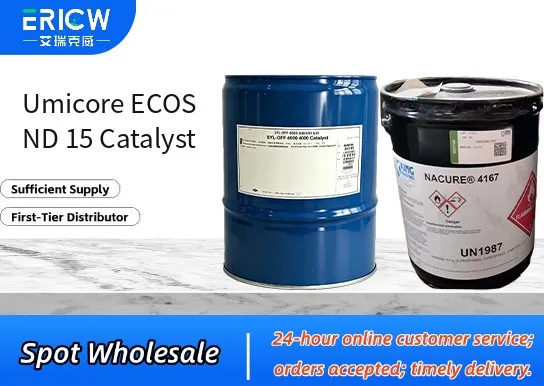
Q1: What types of polymerization reactions is the JM6 Series specifically designed for?
A: The JM6 Series is engineered for selective catalysis in condensation polymerizations—particularly polyurethane and polyurea systems—where precise control over gel time, pot life, and cure profile is critical. It exhibits strong activity toward isocyanate–hydroxyl and isocyanate–amine reactions while maintaining compatibility with common formulation additives.
Q2: How does JM6 compare to traditional amine-based catalysts in terms of odor and volatility?
A: JM6 catalysts are non-volatile, low-odor metal complexes formulated to minimize workplace exposure concerns and avoid post-cure emissions. Unlike many tertiary amines, they do not contribute significantly to volatile organic compound (VOC) content or residual odor in cured end products.
Q3: Is JM6 suitable for use in moisture-sensitive or ambient-cure applications?
A: Yes—JM6 catalysts demonstrate good stability in anhydrous environments and remain effective under ambient curing conditions. Their reactivity is tuned to balance sensitivity to atmospheric moisture with reliable performance in both sealed and open-processing scenarios.
Q4: Can JM6 be used alongside other catalysts or co-catalysts in hybrid systems?
A: JM6 is compatible with a range of complementary catalysts—including latency-enhancing agents and select organometallics—enabling formulators to fine-tune reaction kinetics. Compatibility testing is recommended for specific combinations to ensure optimal synergy and shelf-life stability.
Contact With Us:
E-mail: wangxingqiang@ericwchem.com
Have a Questions? Call Us:
Add:
Building A1, Jiete Industrial Park, Huangpu District, Guangzhou City, Guangdong Province, China