English
 Español
 tiếng việt
 русский
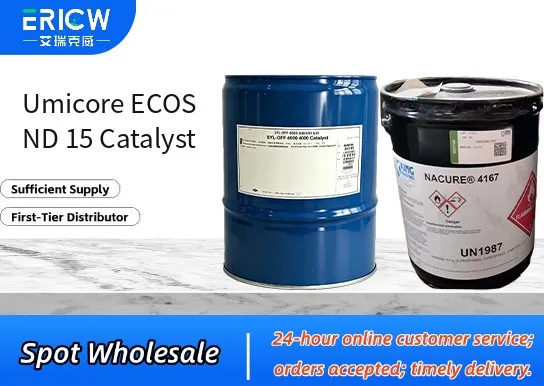
Highly selective low-temperature oxidation catalyst for nitrogen oxides (NOₓ) abatement.
Engineered with optimized ceria-zirconia mixed oxide support for enhanced thermal stability and sulfur resistance.
Low precious metal loading (Pd-dominant formulation) enabling cost-effective emissions control.
Robust performance across variable gas compositions, including fluctuating O₂ and H₂O concentrations.
Designed for seamless integration into compact aftertreatment systems for stationary and mobile applications.
Exhaust aftertreatment for natural gas-fired lean-burn engines.
NOₓ reduction in industrial combustion units (e.g., boilers, turbines, heaters).
Gas conditioning systems for biogas and landfill gas upgrading.
Secondary emission control in chemical process vent streams containing dilute NOₓ.
Compliance solutions for EPA Tier 4 Final and EU Stage V regulatory requirements.
| Chemical Type | Palladium-based ceria-zirconia oxidation catalyst |
| Product Form | Monolithic ceramic honeycomb (cordierite or silicon carbide substrate) |
| Appearance | Beige-to-light-brown coated monolith; uniform washcoat distribution |
| Primary Applications | Low-temperature NO oxidation and NOₓ abatement in lean exhaust streams |
| Key Features | High NO-to-NO₂ conversion efficiency (>85% at 150–250 °C) |
| Benefits | Enables downstream SCR or adsorption systems; extends system lifetime via sulfur tolerance |
| Operating Temperature Range | 120–450 °C (optimal window: 150–300 °C) |
| Storage Conditions | Dry, ambient temperature; avoid exposure to liquid water or strong acids |
Q1: What is the primary function of Umicore ECOS ND 15 Catalyst in polyurethane systems?
A: Umicore ECOS ND 15 is a non-tin, metal-free catalyst designed to promote the urethane reaction (isocyanate–polyol coupling) with high selectivity and reduced side reactions, supporting improved pot life control and enhanced foam or elastomer morphology.
Q2: Is ECOS ND 15 suitable for use in low-VOC or bio-based polyurethane formulations?
A: Yes — as a non-metallic, amine-based catalyst, ECOS ND 15 contributes to lower heavy metal content and aligns well with VOC-reduction strategies and formulations incorporating renewable polyols, without compromising catalytic efficiency.
Q3: How does ECOS ND 15 compare to traditional tin catalysts in terms of hydrolytic stability?
A: Unlike stannous octoate, ECOS ND 15 exhibits significantly improved resistance to hydrolysis, making it more robust in moisture-sensitive applications and extending shelf life in pre-mixes containing reactive components or trace water.
Q4: What are typical handling and storage recommendations for ECOS ND 15?
A: Store in tightly sealed original containers under dry, cool conditions (below 30 °C), protected from moisture and direct sunlight. Avoid prolonged exposure to ambient humidity during handling to maintain catalytic consistency and shelf life.
Contact With Us:
E-mail: wangxingqiang@ericwchem.com
Have a Questions? Call Us:
Add:
Building A1, Jiete Industrial Park, Huangpu District, Guangzhou City, Guangdong Province, China