English
 Español
 tiếng việt
 русский
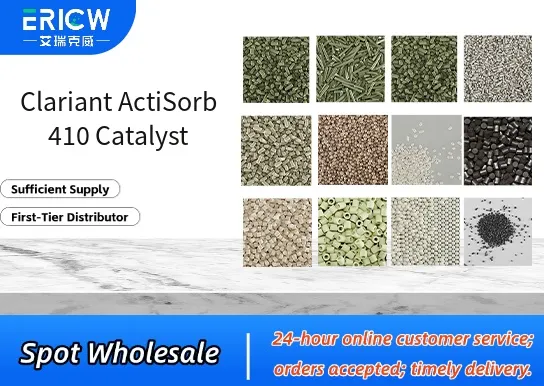
Highly selective palladium-based catalyst optimized for hydrogenation of nitroaromatics under mild conditions.
Exceptional resistance to sulfur poisoning, enabling robust performance in feedstocks with trace impurities.
Consistent batch-to-batch reproducibility ensured by Clariant’s GMP-compliant manufacturing and strict quality control.
Low metal leaching (<0.1 ppm Pd) in reaction media, supporting stringent regulatory requirements for pharmaceutical intermediates.
Engineered porous support structure providing high surface area and improved mass transfer kinetics.
Hydrogenation of nitrobenzene to aniline in fine chemical synthesis.
Selective reduction of nitro groups in multistep pharmaceutical API manufacturing.
Production of aromatic amines for agrochemical intermediates.
Catalytic upgrading of dye and pigment precursors requiring high purity amine output.
Continuous-flow hydrogenation processes in microreactor and fixed-bed reactor systems.
| Chemical Type | Palladium on activated carbon |
| Product Form | Free-flowing granular solid |
| Appearance | Black granules, uniform size distribution |
| Palladium Content | 5.0 wt% ± 0.2 wt% |
| Carbon Support Surface Area | ~1000 m²/g (BET) |
| Granule Size Range | 1.2–2.5 mm |
| Moisture Content | ≤ 5.0 wt% |
| Primary Applications | Nitroaromatic hydrogenation, selective amine synthesis |
Q1: What is the primary function of ActiSorb 410 in polymer processing?
A: ActiSorb 410 is a solid, heterogeneous catalyst designed to promote controlled crosslinking and post-polymerization reactions—particularly in thermoset resins and reactive polymer systems—enhancing thermal stability, mechanical performance, and cure efficiency under moderate temperature conditions.
Q2: Is ActiSorb 410 compatible with common resin systems such as epoxy, phenolic, or unsaturated polyester?
A: Yes, ActiSorb 410 demonstrates broad compatibility with aromatic and aliphatic epoxy resins, novolac-type phenolics, and selected unsaturated polyesters. Its activity profile is optimized for systems requiring delayed onset and sustained catalytic action during thermal curing cycles.
Q3: How should ActiSorb 410 be handled and stored to maintain its effectiveness?
A: Store in original sealed packaging under cool, dry conditions away from moisture, direct sunlight, and strong oxidizing agents. Due to its hygroscopic nature, prolonged exposure to ambient humidity may reduce catalytic activity; therefore, resealing containers tightly after use is strongly recommended.
Q4: Can ActiSorb 410 be used in food-contact or pharmaceutical-grade applications?
A: ActiSorb 410 is not pre-qualified for direct food-contact or pharmaceutical use. It is intended for industrial polymer modification and high-performance composite manufacturing. Customers requiring regulatory compliance must conduct full suitability assessments—including extractables testing and regulatory review—within their specific application context.
Q5: What is the typical dosage range for ActiSorb 410 in resin formulations?
A: Dosage is formulation-dependent but generally ranges from 0.1% to 2% by weight relative to the base resin. Optimal loading is determined empirically based on desired gel time, exotherm profile, and final physical properties—typically starting at lower concentrations and adjusting incrementally during process development.
Contact With Us:
E-mail: wangxingqiang@ericwchem.com
Have a Questions? Call Us:
Add:
Building A1, Jiete Industrial Park, Huangpu District, Guangzhou City, Guangdong Province, China