English
 Español
 tiếng việt
 русский

Highly selective for propylene production via catalytic dehydrogenation of propane.
Enhanced thermal and hydrothermal stability under continuous industrial operating conditions.
Optimized metal dispersion and support structure for extended catalyst cycle life.
Low coke formation tendency, enabling longer run lengths and reduced regeneration frequency.
Designed for compatibility with modern fixed-bed and moving-bed reactor configurations.
On-purpose propylene production in propane dehydrogenation (PDH) plants.
Integration into grassroots PDH units requiring high single-pass yield and energy efficiency.
Retrofit applications for existing dehydrogenation facilities seeking improved selectivity and capacity.
Supply chain-critical operations demanding consistent product quality and regulatory compliance.
| Chemical Type | Platinum-tin based bimetallic catalyst on modified alumina support |
| Product Form | Extrudates (cylindrical pellets) |
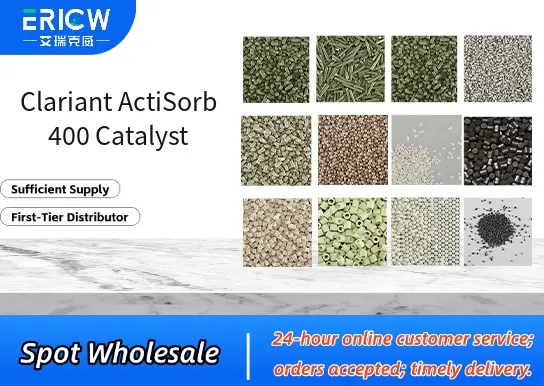
| Appearance | Gray to dark gray solid, free-flowing granules |
| Primary Applications | Propane dehydrogenation (PDH) to propylene |
| Key Features | High propylene selectivity, low methane/ethane byproduct formation |
| Benefits | Improved process economics through higher yield per pass and reduced hydrogen make-up |
| Handling Precautions | Store in dry, inert atmosphere; avoid exposure to moisture and air prior to reduction |
Q1: What is the primary function of the OleMax 350 Series in olefin polymerization processes?
A: The OleMax 350 Series is a high-activity Ziegler–Natta catalyst system designed to enable efficient propylene and ethylene–propylene copolymer production, offering excellent stereoselectivity and particle morphology control for robust reactor performance.
Q2: How does the OleMax 350 Series differ from earlier-generation Clariant olefin catalysts?
A: Compared to prior series, OleMax 350 features an optimized internal donor package and tailored support structure, resulting in improved activity retention, narrower molecular weight distribution, and enhanced compatibility with modern high-activity polymerization processes—including gas-phase and bulk slurry reactors.
Q3: Is pre-treatment or activation required before using OleMax 350 in production?
A: No external activation step is needed — OleMax 350 is supplied as a ready-to-use solid catalyst. It is typically employed with standard organoaluminum co-catalysts (e.g., triethylaluminum) and external donors in conventional Ziegler–Natta systems, following established plant startup protocols.
Q4: What handling precautions should be observed during storage and dosing?
A: OleMax 350 is moisture- and oxygen-sensitive. It must be stored under inert atmosphere (e.g., nitrogen or argon), in sealed containers, at controlled ambient temperatures. Handling requires dry, oxygen-free environments and appropriate personal protective equipment to maintain catalytic integrity and ensure operator safety.
Q5: Can OleMax 350 be used in combination with metallocene or post-metallocene catalysts?
A: OleMax 350 is specifically formulated for conventional Ziegler–Natta systems and is not intended for direct blending or co-use with single-site catalysts. Cross-catalyst interactions may lead to unpredictable kinetics or reduced selectivity; dedicated process validation would be required for hybrid applications.
Contact With Us:
E-mail: wangxingqiang@ericwchem.com
Have a Questions? Call Us:
Add:
Building A1, Jiete Industrial Park, Huangpu District, Guangzhou City, Guangdong Province, China