English
 Español
 tiếng việt
 русский
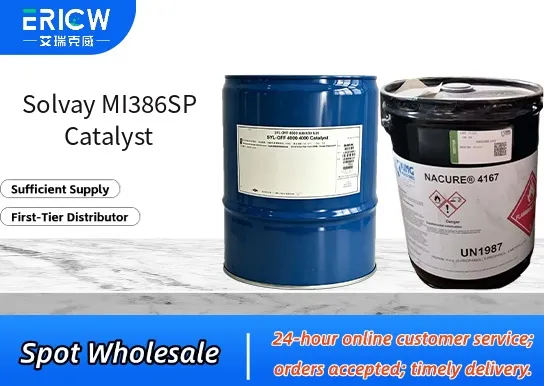
Highly selective for asymmetric epoxidation of allylic alcohols.
Thermally stable up to 80 °C under controlled reaction conditions.
Low metal leaching ensures product purity and simplifies downstream processing.
Compatible with common organic solvents including dichloromethane and toluene.
Consistent batch-to-batch performance validated per Solvay’s QC protocols.
Production of chiral epoxy alcohol intermediates for pharmaceutical APIs.
Synthesis of enantiomerically enriched building blocks in fine chemical manufacturing.
Catalytic step in the manufacture of agrochemical active ingredients.
Key enabler for stereoselective routes in specialty polymer precursors.
| Chemical Type | Titanium-based chiral catalyst complex |
| Product Form | Powder (free-flowing, non-hygroscopic) |
| Appearance | Off-white to pale yellow crystalline solid |
| Primary Applications | Asymmetric epoxidation of allylic alcohols |
| Key Features | Chirally modified titanium tartrate derivative |
| Benefits | Enables >90% ee in optimized substrate systems |
| Storage Conditions | Store under inert atmosphere at 2–8 °C |
| Shelf Life | 24 months from date of manufacture when stored properly |
Q1: What is the primary application of Solvay MI386SP Catalyst?
A: Solvay MI386SP Catalyst is specifically engineered for use in high-performance silicone elastomer systems, particularly in platinum-catalyzed addition-cure formulations requiring precise control over cure kinetics, low-temperature reactivity, and extended pot life.
Q2: How does MI386SP differ from standard platinum-based catalysts?
A: MI386SP is a specially stabilized, ligand-modified platinum complex designed to offer enhanced thermal latency and improved compatibility with challenging fillers or functional additives—enabling more consistent processing behavior and reduced risk of premature curing during mixing or storage.
Q3: What is the recommended dosage range for MI386SP in typical formulations?
A: Dosage depends on formulation requirements, but MI386SP is typically used at low concentrations—generally ranging from 0.1% to 2% by weight relative to the base polymer—allowing fine-tuning of cure speed without compromising final physical properties.
Q4: Is MI386SP compatible with common silicone inhibitors or retarders?
A: Yes—MI386SP demonstrates good compatibility with widely used inhibition systems, including acetylenic alcohols and maleates, supporting robust process control in applications requiring delayed onset of cure or extended working time.
Q5: How should MI386SP be handled and stored to maintain optimal performance?
A: Store in original sealed containers under cool, dry conditions away from direct sunlight and strong oxidizing agents. Avoid prolonged exposure to ambient moisture or elevated temperatures during handling to preserve catalytic activity and shelf life.
Contact With Us:
E-mail: wangxingqiang@ericwchem.com
Have a Questions? Call Us:
Add:
Building A1, Jiete Industrial Park, Huangpu District, Guangzhou City, Guangdong Province, China