English
 Español
 tiếng việt
 русский
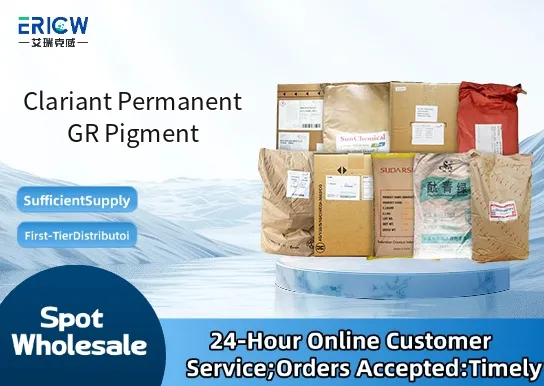
Excellent lightfastness and weather resistance for long-term color stability outdoors.
High thermal stability suitable for polymer processing up to 280 °C.
Good dispersibility in both polar and non-polar media, including polyolefins and engineering plastics.
Low migration tendency, meeting stringent regulatory requirements for food-contact applications.
Consistent batch-to-batch color strength and hue, ensuring reliable production performance.
Polypropylene (PP) and polyethylene (PE) fibers and films.
Automotive interior components requiring high UV durability.
Household appliances with exposed plastic housings.
Food packaging films compliant with FDA 21 CFR §178.3297 and EU Plastics Regulation (EU) No 10/2011.
Industrial coatings and powder coatings demanding chromatic purity and gloss retention.
| Chemical Type | Chlorinated copper phthalocyanine derivative |
| Product Form | Free-flowing granular pigment concentrate |
| Appearance | Greenish-blue granules |
| Primary Applications | Polyolefins, engineering plastics, coatings, inks |
| Key Features | High tinctorial strength, excellent dispersion, low dusting |
| Benefits | Reduced dosage requirement, improved process efficiency, enhanced final product aesthetics |
| Regulatory Compliance | REACH registered; compliant with ISO 8130-14 for powder coatings |
Q1: What is the primary chemical class of Clariant Permanent GR Pigment?
A: Clariant Permanent GR Pigment is a high-performance organic pigment based on the diketopyrrolopyrrole (DPP) chemical family, known for exceptional chromatic strength, thermal stability, and lightfastness.
Q2: Is this pigment suitable for use in food-contact plastics?
A: Clariant Permanent GR Pigment is not pre-approved for direct food-contact applications under global regulatory frameworks. Its suitability depends on final formulation, processing conditions, and compliance verification by the compounder or end-user against applicable regional regulations.
Q3: How does this pigment perform under high-temperature processing conditions?
A: Permanent GR exhibits excellent thermal stability and is widely used in engineering thermoplastics such as polyamide and polyesters processed at temperatures up to 300 °C, with minimal risk of decomposition or hue shift.
Q4: What dispersion methods are recommended for optimal color development?
A: For best results, high-shear compounding—such as twin-screw extrusion—is recommended. Pre-dispersed masterbatches or liquid concentrates may also be used depending on the base polymer and equipment capabilities.
Q5: Can this pigment be used in outdoor applications requiring long-term weather resistance?
A: Yes—Permanent GR offers very good UV stability and weather resistance, especially when stabilized in appropriate polymer matrices and compounded with compatible UV absorbers or HALS systems.
Contact With Us:
E-mail: wangxingqiang@ericwchem.com
Have a Questions? Call Us:
Add:
Building A1, Jiete Industrial Park, Huangpu District, Guangzhou City, Guangdong Province, China