English
 Español
 tiếng việt
 русский
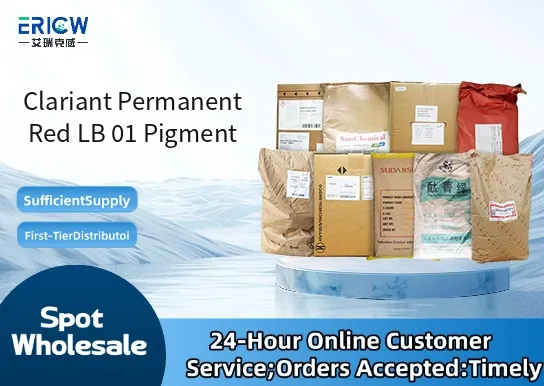
High chroma and excellent color strength for vibrant, consistent red shades.
Outstanding thermal stability suitable for high-temperature processing up to 280 °C.
Good lightfastness and weather resistance in demanding outdoor applications.
Excellent dispersibility in both polar and non-polar polymer matrices.
Low volatility and minimal extractables, meeting stringent regulatory requirements for plastics and packaging.
Polyolefin (PP, PE) injection molding and blow-molded containers.
Engineering plastics including ABS, PS, and PC for automotive interior components.
Food-contact compliant rigid packaging films and caps.
Household appliances and consumer electronics housings.
Masterbatch formulations for wire & cable jacketing and construction profiles.
| Chemical Type | Quinacridone derivative |
| Product Form | Free-flowing powder |
| Appearance | Red-violet powder |
| Primary Applications | Plastics, masterbatches, synthetic fibers |
| Key Features | Thermally stable, low migration, high tinctorial strength |
| Regulatory Compliance | EU Food Contact Regulation (EU) No. 10/2011 compliant (for specific conditions) |
| Particle Size (D50) | Approx. 0.12–0.18 µm |
| Heat Stability | Stable up to 280 °C for 5 min in polypropylene |
Q1: What is the primary chemical class of Permanent Red LB 01?
A: Permanent Red LB 01 is a high-performance, polycyclic azo pigment, specifically classified as a diketopyrrolopyrrole (DPP)-based red pigment. It is not a dye or a metal-complex pigment, and its molecular structure contributes to its excellent thermal stability and lightfastness.
Q2: Is this pigment suitable for use in food-contact plastics?
A: Permanent Red LB 01 is not approved for direct food-contact applications under major global regulatory frameworks. It may be considered for non-migrating, indirect food-contact uses—such as external packaging layers—subject to full formulation evaluation and compliance verification by the end-user according to applicable regional regulations.
Q3: How does this pigment perform under high-temperature processing conditions?
A: Permanent Red LB 01 exhibits very good thermal stability and is suitable for high-shear, high-temperature polymer processing, including polyolefin compounding and engineering thermoplastics such as polyesters and polyamides. It typically withstands continuous processing temperatures up to 280–300 °C without significant color shift or decomposition.
Q4: What dispersion methods are recommended for optimal color development?
A: For best results, dispersion should be carried out using high-shear equipment such as twin-screw extruders or bead mills. Pre-treatment with compatible dispersants or surface modifiers is often beneficial, especially in polar polymer systems. Optimal dispersion ensures maximum color strength, gloss, and batch-to-batch consistency.
Q5: Can Permanent Red LB 01 be used in water-based coatings or inks?
A: Yes—when properly formulated with appropriate surfactants and stabilizers, Permanent Red LB 01 can be successfully incorporated into aqueous systems such as architectural paints, industrial coatings, and water-based flexographic or gravure inks. Performance depends on particle size control and colloidal stability during milling and storage.
Contact With Us:
E-mail: wangxingqiang@ericwchem.com
Have a Questions? Call Us:
Add:
Building A1, Jiete Industrial Park, Huangpu District, Guangzhou City, Guangdong Province, China