English
 Español
 tiếng việt
 русский
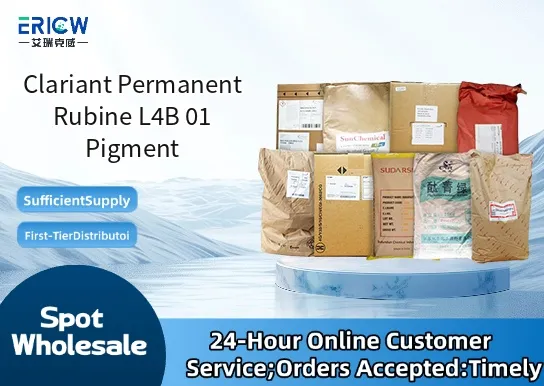
High chroma and clean bluish-red shade with excellent tinctorial strength.
Outstanding thermal stability suitable for high-temperature processing up to 250 °C.
Good lightfastness and weather resistance in demanding outdoor applications.
Excellent dispersibility in both polar and non-polar polymer systems.
Compliant with major global regulatory frameworks including REACH and RoHS.
Automotive coatings requiring high durability and color consistency.
Engineering plastics including polyolefins, ABS, and polycarbonate.
Industrial coatings for metal and plastic substrates.
Packaging inks for flexible films and rigid containers.
Masterbatch formulations for color concentrate production.
| Chemical Type | Quinacridone derivative |
| Product Form | Fine organic pigment powder |
| Appearance | Free-flowing violet-red powder |
| Primary Applications | Coatings, plastics, inks |
| Key Features | High transparency, good migration resistance |
| Benefits | Consistent batch-to-batch color performance |
| Recommended Processing | High-shear dispersion |
| Storage Conditions | Store in cool, dry place; protect from moisture |
Q1: What is the primary chemical class and pigment type of Permanent Rubine L4B 01?
A: Permanent Rubine L4B 01 is a high-performance organic pigment belonging to the quinacridone derivative family, specifically engineered for exceptional lightfastness, thermal stability, and color strength in demanding polymer applications.
Q2: Is this pigment suitable for use in food-contact plastics?
A: Permanent Rubine L4B 01 is not pre-approved for direct food-contact applications under major global regulatory frameworks. Its suitability must be evaluated case-by-case based on the final formulation, processing conditions, and applicable regional regulations—consult Clariant’s regulatory documentation and conduct migration testing as required.
Q3: How does this pigment perform during high-temperature processing, such as injection molding of engineering thermoplastics?
A: Designed for thermal robustness, Permanent Rubine L4B 01 demonstrates excellent resistance to degradation at temperatures commonly encountered in polyolefin and engineering plastic processing—typically up to 280–300 °C—without significant hue shift or loss of chroma.
Q4: What dispersion methods are recommended to achieve optimal color development and consistency?
A: Optimal dispersion is achieved using high-shear compounding techniques—such as twin-screw extrusion—with appropriate carrier resins and dispersing aids. Pre-dispersed masterbatches are widely used to ensure uniform distribution and reproducible color performance across production batches.
Contact With Us:
E-mail: wangxingqiang@ericwchem.com
Have a Questions? Call Us:
Add:
Building A1, Jiete Industrial Park, Huangpu District, Guangzhou City, Guangdong Province, China