English
 Español
 tiếng việt
 русский
Highly selective for propylene oxide (PO) production via the hydrogen peroxide to propylene oxide (HPPO) process.
Exceptional long-term stability under industrial hydroperoxidation conditions.
Low metal leaching ensures consistent catalyst performance and reduced downstream purification burden.
Tailored titanium-silicalite (TS-1) based formulation with optimized acidity and pore structure.
Compatible with continuous fixed-bed reactor configurations for scalable manufacturing.
Propylene oxide (PO) synthesis in HPPO technology plants.
Co-production of PO and water in integrated petrochemical facilities.
Green chemical manufacturing requiring high atom economy and minimal by-products.
On-purpose PO supply chains supporting polyether polyols and propylene glycol production.
Sustainable monomer production aligned with ISO 14040 life cycle assessment requirements.
| Chemical Type | Titanium-containing silicalite-1 (TS-1) zeolite |
| Product Form | Free-flowing granular solid |
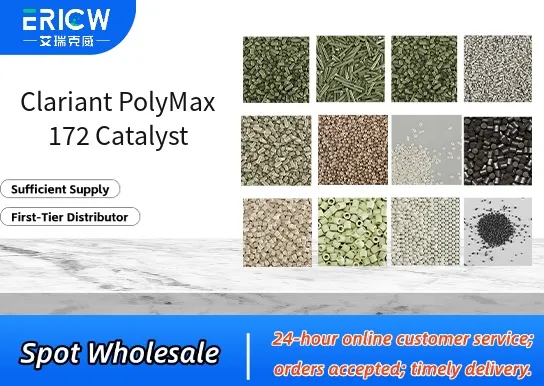
| Appearance | White to off-white cylindrical pellets |
| Primary Applications | Hydrogen peroxide-based propylene epoxidation (HPPO) |
| Key Features | High Ti dispersion, hydrophobic surface, narrow particle size distribution |
| Benefits | Reduced catalyst deactivation, >95% PO selectivity, low H₂O₂ decomposition |
| Storage Conditions | Dry, ambient temperature, protected from moisture and strong oxidizers |
| Regulatory Compliance | REACH registered; non-hazardous per GHS classification |
Q1: What is the primary function of PolyMax 172 in polyolefin processing?
A: PolyMax 172 is a highly active metallocene-based catalyst designed to enable precise control over polymer microstructure—particularly for producing linear low-density polyethylene (LLDPE) and ethylene–α-olefin copolymers with narrow molecular weight distribution and uniform comonomer incorporation.
Q2: Is PolyMax 172 compatible with conventional Ziegler–Natta or Phillips catalyst systems?
A: No—PolyMax 172 is a single-site catalyst and is not intended for direct blending or co-use with multi-site catalysts. It requires dedicated reactor configurations and process conditions optimized for metallocene catalysis to achieve consistent performance and avoid deactivation or unpredictable polymer properties.
Q3: How is PolyMax 172 typically supplied and handled?
A: PolyMax 172 is supplied as a free-flowing, dry powder supported on silica, packaged under inert atmosphere to preserve activity. It must be handled under strict nitrogen or argon environments, avoiding exposure to moisture, oxygen, or polar contaminants during storage, transfer, and dosing.
Q4: What are key processing advantages when using PolyMax 172 compared to traditional catalysts?
A: Users commonly observe improved melt homogeneity, reduced gel formation, enhanced clarity in film applications, and greater flexibility in tailoring density and mechanical properties—all enabled by the catalyst’s high stereoselectivity and consistent active site distribution.
Contact With Us:
E-mail: wangxingqiang@ericwchem.com
Have a Questions? Call Us:
Add:
Building A1, Jiete Industrial Park, Huangpu District, Guangzhou City, Guangdong Province, China