English
 Español
 tiếng việt
 русский
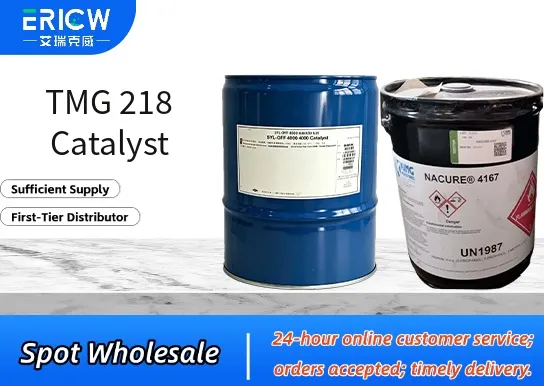
Highly selective for low-temperature urethane formation without side reactions.
Thermally stable up to 180°C, enabling robust performance in demanding processing conditions.
Low volatility and minimal odor, supporting safer handling and improved workplace air quality.
Compatible with common polyols, isocyanates, and blowing agents used in flexible and rigid foam systems.
Non-corrosive to standard stainless steel and aluminum process equipment.
Flexible polyurethane slabstock foam for mattresses and furniture cushioning.
Rigid polyurethane and polyisocyanurate insulation foams for construction and refrigeration.
Integral skin (self-skinning) foams for automotive seating and medical device components.
Coating and adhesive formulations requiring controlled reactivity and extended pot life.
Reaction injection molding (RIM) systems requiring precise gel–rise balance.
| Chemical Type | Tertiary amine-based liquid catalyst |
| Product Form | Clear, light amber liquid |
| Appearance | Homogeneous, free of sediment or cloudiness |
| Density (25°C) | 0.92–0.94 g/cm³ |
| Viscosity (25°C) | 15–25 mPa·s |
| pH (1% aqueous solution) | 10.2–10.8 |
| Primary Applications | Polyurethane foam catalysis (gelling & blowing balance) |
| Storage Stability | ≥12 months at 15–25°C in sealed original container |
Q1: What is the primary chemical function of TMG 218 Catalyst in polymerization reactions?
A: TMG 218 Catalyst is a tertiary amine-based accelerator designed to promote urethane and epoxy curing reactions, particularly in polyurethane prepolymers and hybrid coating systems. It functions by enhancing nucleophilicity and facilitating isocyanate–hydroxyl or amine–epoxide coupling without generating volatile byproducts.
Q2: How does TMG 218 differ from traditional DABCO-type catalysts in terms of handling and stability?
A: Unlike highly volatile or moisture-sensitive catalysts, TMG 218 offers improved hydrolytic stability and reduced volatility, supporting safer handling and longer shelf life under standard storage conditions. Its liquid form and moderate basicity also contribute to better formulation compatibility and reduced risk of premature gelation.
Q3: Is TMG 218 suitable for low-VOC or high-solids coating formulations?
A: Yes — TMG 218 is compatible with low-VOC and high-solids systems due to its non-volatile nature and absence of reactive solvents or halogenated components. It enables efficient cure development without compromising regulatory compliance targets for emissions.
Q4: What are typical dosage guidelines when using TMG 218 in polyurethane elastomer applications?
A: Dosage depends on formulation requirements and desired pot life/cure profile, but it is typically used at low concentrations — generally ranging from 0.1% to 2% by weight relative to the total resin solids. Optimization is recommended via small-scale trials under actual processing conditions.
Contact With Us:
E-mail: wangxingqiang@ericwchem.com
Have a Questions? Call Us:
Add:
Building A1, Jiete Industrial Park, Huangpu District, Guangzhou City, Guangdong Province, China