English
 Español
 tiếng việt
 русский
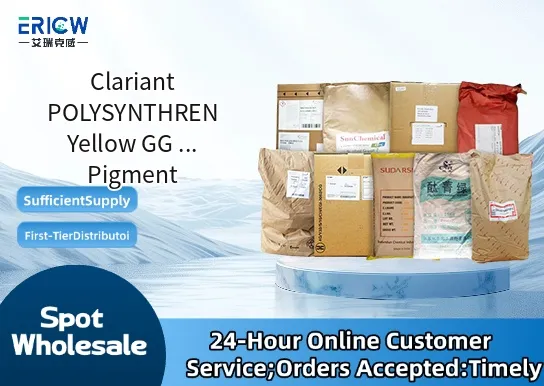
High chroma and excellent brightness for vibrant yellow coloration.
Outstanding thermal stability suitable for high-temperature processing up to 280 °C.
Good lightfastness and weather resistance in demanding outdoor applications.
Excellent dispersibility in both polar and non-polar polymer matrices.
Low volatility and minimal extractables, meeting stringent regulatory requirements for plastics.
Polyolefin injection molding (e.g., PP, PE containers and automotive components).
Engineering plastics including ABS, PC, and PA for consumer electronics housings.
Masterbatch production for food-contact-compliant packaging films.
Automotive interior trim requiring long-term color retention and low fogging.
Household appliances where heat resistance and consistent hue are critical.
| Chemical Type | Azo pigment (disazo) |
| Product Form | Free-flowing powder |
| Appearance | Yellow to greenish-yellow fine powder |
| Primary Applications | Plastics (especially polyolefins and engineering thermoplastics) |
| Key Features | Thermal stability, dispersion performance, color strength |
| Benefits | Consistent batch-to-batch color, low dust generation, compatibility with common processing aids |
| Regulatory Compliance | EU REACH registered; compliant with FDA 21 CFR §178.3297 for polymer additives |
| Storage Conditions | Store in cool, dry place below 30 °C; protect from moisture and direct sunlight |
Q1: What is the primary application field for POLYSYNTHREN Yellow GG pigments?
A: POLYSYNTHREN Yellow GG pigments are specifically developed for high-performance solvent-based and energy-curable inks, including gravure, flexo, and screen printing inks for packaging and industrial applications. They offer excellent dispersion stability, gloss, and lightfastness in demanding print environments.
Q2: Is POLYSYNTHREN Yellow GG suitable for food-contact packaging inks?
A: Yes — when formulated according to applicable regulatory frameworks and used in compliance with good manufacturing practices, POLYSYNTHREN Yellow GG is designed for use in inks intended for indirect food contact applications. Final compliance depends on the full ink formulation, substrate, and processing conditions.
Q3: How should POLYSYNTHREN Yellow GG be dispersed in ink systems?
A: Optimal performance is achieved using high-shear dispersion techniques — such as bead milling or three-roll grinding — in compatible solvent or reactive vehicle systems. Pre-wetting with a portion of the vehicle prior to milling is recommended to ensure uniform deagglomeration and stable pigment distribution.
Q4: What are the key handling and storage recommendations?
A: Store in original, tightly sealed containers in a cool, dry place away from direct sunlight and sources of heat or ignition. Avoid prolonged exposure to moisture or incompatible chemicals. Handle using appropriate personal protective equipment (PPE) as outlined in the Safety Data Sheet (SDS).
Contact With Us:
E-mail: wangxingqiang@ericwchem.com
Have a Questions? Call Us:
Add:
Building A1, Jiete Industrial Park, Huangpu District, Guangzhou City, Guangdong Province, China