English
 Español
 tiếng việt
 русский
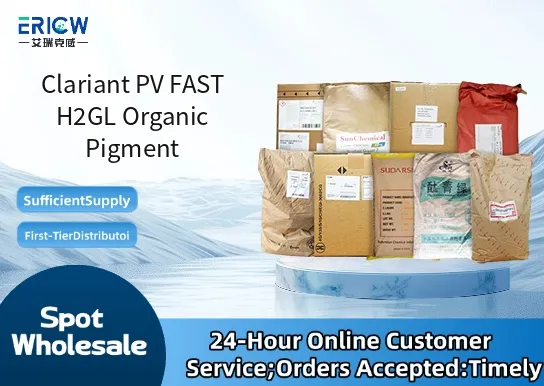
High chroma and excellent color strength for vibrant, consistent red shades.
Outstanding thermal stability suitable for high-speed extrusion processes up to 260 °C.
Good lightfastness and weather resistance in demanding outdoor applications.
Excellent migration resistance in PVC, polyolefins, and styrenic polymers.
Low volatile organic content (VOC) and compliant with major regulatory frameworks including REACH and RoHS.
Coloration of rigid and flexible PVC profiles, pipes, and flooring.
Pigmentation of polypropylene (PP) and polyethylene (PE) fibers and injection-molded parts.
Use in polystyrene (PS) and ABS for consumer electronics housings and automotive interior trim.
Masterbatch formulations for food-contact-compliant packaging films (subject to local regulatory approval).
Industrial coatings requiring high-gloss red tones with good opacity and dispersion stability.
| Chemical Type | Quinacridone derivative |
| Product Form | Fine powder |
| Appearance | Red-violet free-flowing powder |
| Primary Applications | PVC, polyolefins, styrenics, industrial coatings |
| Key Features | High thermal stability, low migration, excellent dispersibility |
| Benefits | Consistent batch-to-batch color, reduced processing defects, extended service life |
| Regulatory Status | REACH registered; RoHS compliant; non-heavy-metal-based |
| Storage Conditions | Store in cool, dry place below 30 °C; protect from moisture and direct sunlight |
Q1: What is the primary chemical class and typical hue profile of PV FAST H2GL?
A: PV FAST H2GL is a high-performance quinacridone-based organic pigment, delivering a clean, bluish-red shade with excellent chroma and strong tinting strength. Its molecular structure provides inherent stability in demanding processing conditions.
Q2: Is PV FAST H2GL suitable for use in food-contact plastics?
A: PV FAST H2GL is designed for high-performance industrial applications and is not pre-qualified for direct food-contact use under global regulatory frameworks. Customers requiring food-contact compliance must conduct full regulatory evaluation—including migration testing—within their specific polymer matrix and application conditions.
Q3: How does PV FAST H2GL perform under high-temperature processing, such as in engineering thermoplastics?
A: This pigment exhibits excellent thermal stability, maintaining color integrity and dispersion quality during standard melt processing of polyolefins, polyesters, and certain engineering plastics. It is formulated to resist degradation up to typical extrusion and injection molding temperatures encountered in these systems.
Q4: What types of dispersants or carrier resins are recommended for optimal masterbatch formulation?
A: PV FAST H2GL is compatible with common polyolefin and polyester-based carriers. For best dispersion and rheology control, non-ionic surfactants or low-acid-number functional polyolefins are typically preferred—formulation should be optimized based on final polymer matrix and processing method.
Q5: Can PV FAST H2GL be used in water-based coatings or inks?
A: While primarily developed for thermoplastic coloration, PV FAST H2GL can be adapted for aqueous systems using appropriate surface treatment and stabilization technologies. However, its standard grade is optimized for non-aqueous, high-shear melt compounding—not direct aqueous dispersion.
Contact With Us:
E-mail: wangxingqiang@ericwchem.com
Have a Questions? Call Us:
Add:
Building A1, Jiete Industrial Park, Huangpu District, Guangzhou City, Guangdong Province, China