English
 Español
 tiếng việt
 русский
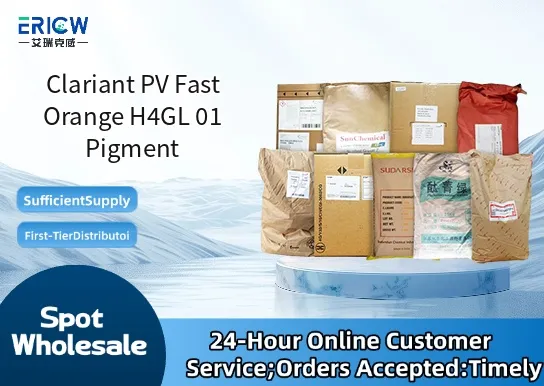
High chroma and excellent brightness for vibrant orange shades.
Outstanding thermal stability suitable for high-temperature processing up to 280 °C.
Good lightfastness and weather resistance in demanding outdoor applications.
Excellent dispersibility in both polar and non-polar polymer systems.
Compliant with major global regulatory frameworks including REACH and RoHS.
Polyolefin fibers and spunbond nonwovens.
Automotive interior plastics (dashboards, trim components).
Engineering thermoplastics such as ABS and PS.
Masterbatch formulations for injection molding and extrusion.
Coatings requiring high color strength and UV durability.
| Chemical Type | Polycyclic azo pigment |
| Product Form | Free-flowing powder |
| Appearance | Orange-red powder |
| Primary Applications | Plastics, masterbatches, coatings |
| Key Features | High tinctorial strength, low migration |
| Benefits | Consistent batch-to-batch color reproducibility |
| Heat Stability | Up to 280 °C (5 min, polyolefin) |
| Lightfastness (ISO 105-B02) | 7–8 (on blue wool scale) |
Q1: What is the primary application field for PV Fast Orange H4GL 01?
A: PV Fast Orange H4GL 01 is primarily developed for high-performance solvent-based and water-based industrial coatings, including automotive refinish, coil coatings, and general metal decoration where excellent lightfastness, heat stability, and gloss retention are required.
Q2: Is this pigment suitable for food-contact coatings?
A: PV Fast Orange H4GL 01 is not certified for direct food-contact applications. It is intended for decorative or protective industrial coatings where regulatory compliance for food contact is not required. Customers requiring food-safe pigments should consult Clariant’s dedicated portfolio of approved food-contact pigments.
Q3: How does H4GL 01 compare to standard organic orange pigments in terms of weather resistance?
A: Compared to many conventional monoazo orange pigments, H4GL 01 offers significantly improved resistance to UV exposure and atmospheric conditions due to its chemically stabilized molecular structure—making it well-suited for exterior applications demanding long-term color stability.
Q4: What dispersion methods are recommended for optimal performance?
A: For best results, use high-shear dispersion in suitable resin vehicles—typically with polyurethane, acrylic, or alkyd binders. Pre-wetting with compatible solvents and controlled milling time help achieve full development of tinting strength and transparency without agglomeration.
Q5: What is the typical dosage range in coating formulations?
A: Dosage depends on the desired shade intensity and formulation requirements, but it is generally used at low concentrations—typically ranging from 0.1% to 2% by weight relative to total formulation solids.
Contact With Us:
E-mail: wangxingqiang@ericwchem.com
Have a Questions? Call Us:
Add:
Building A1, Jiete Industrial Park, Huangpu District, Guangzhou City, Guangdong Province, China