English
 Español
 tiếng việt
 русский
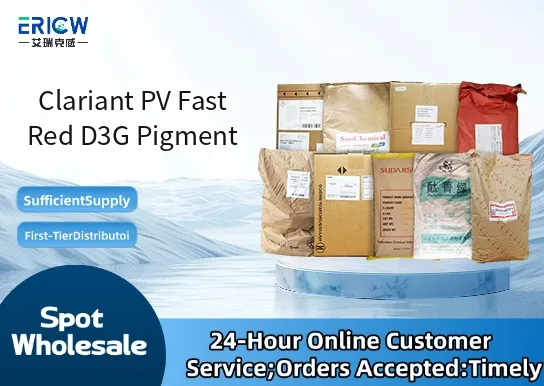
High chroma and excellent color strength for vibrant red shades.
Outstanding thermal stability suitable for high-temperature processing up to 280 °C.
Good lightfastness and weather resistance in demanding outdoor applications.
Excellent dispersibility in both polar and non-polar polymer systems.
Compliant with major global regulatory frameworks including EU REACH and US FDA 21 CFR for selected applications.
Polyolefins (PP, PE) for injection-molded and blow-molded consumer goods.
Engineering plastics including ABS, PS, and PC for automotive interior components.
Masterbatch formulations for fiber and film applications.
Coatings and inks requiring high-gloss, consistent hue, and low migration.
Food-contact-compliant packaging where regulatory approval is required.
| Chemical Type | Quinacridone derivative (Pigment Violet 19 / Red 122 hybrid) |
| Product Form | Free-flowing powder |
| Appearance | Deep bluish-red powder |
| Primary Applications | Plastics, masterbatches, coatings, and inks |
| Key Features | High tinctorial strength, excellent heat stability, low volatility |
| Benefits | Consistent batch-to-batch color, minimal filter clogging, low dust generation |
| Regulatory Status | EU REACH registered; compliant with ISO 8124-3 for toy safety |
| Storage Conditions | Store in cool, dry place below 30 °C; protect from moisture and direct sunlight |
Q1: What is the primary chemical class and pigment type of PV Fast Red D3G?
A: PV Fast Red D3G is a high-performance organic pigment belonging to the diketopyrrolopyrrole (DPP) chemical class, classified as a C.I. Pigment Red 254. It exhibits excellent chromatic strength, clean bluish-red shade, and inherent thermal and light stability.
Q2: In which polymer systems is PV Fast Red D3G most commonly used?
A: This pigment is widely employed in engineering thermoplastics such as polyolefins (PP, PE), polyesters (PET, PBT), and polycarbonate, where high processing temperatures and demanding color performance are required. It demonstrates good dispersion stability and minimal plate-out in extrusion and injection molding applications.
Q3: Is PV Fast Red D3G suitable for food-contact or regulatory-sensitive applications?
A: PV Fast Red D3G is not certified for direct food-contact applications under major global regulatory frameworks. Its use should be evaluated case-by-case against applicable regional requirements, and it is typically selected for non-food-contact industrial, automotive, or decorative applications where high durability and color consistency are critical.
Q4: How does PV Fast Red D3G perform under UV exposure and outdoor weathering?
A: As a DPP-based pigment, PV Fast Red D3G offers very good to excellent UV resistance and weathering stability—particularly when compounded in stable polymer matrices and protected by appropriate UV stabilizers. It maintains color strength and hue fidelity significantly longer than conventional azo reds under accelerated and natural aging conditions.
Q5: What is the typical dosage range for optimal coloration in polymer applications?
A: Dosage depends on formulation requirements and desired opacity or transparency, but PV Fast Red D3G is typically used at low concentrations due to its high tinting strength—generally ranging from 0.1% to 2% by weight in most thermoplastic systems.
Contact With Us:
E-mail: wangxingqiang@ericwchem.com
Have a Questions? Call Us:
Add:
Building A1, Jiete Industrial Park, Huangpu District, Guangzhou City, Guangdong Province, China