English
 Español
 tiếng việt
 русский
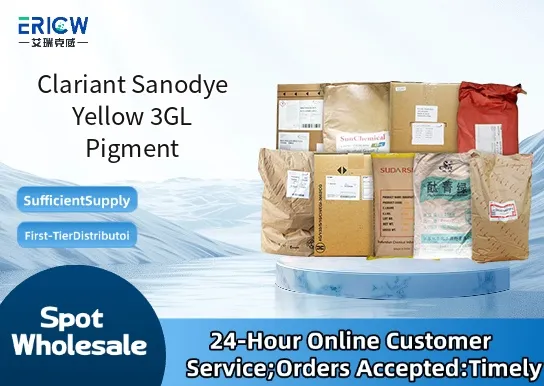
High chromatic strength and excellent lightfastness for long-term color stability.
Outstanding thermal stability suitable for high-temperature processing up to 250 °C.
Good dispersibility in both polar and non-polar polymer systems.
Low migration tendency, ensuring color integrity in demanding applications.
Compliant with major global regulatory frameworks including REACH and RoHS.
Polyolefin masterbatches (PP, PE) for packaging and automotive components.
Engineering plastics including ABS, PS, and PC for consumer electronics housings.
Wire and cable sheathing compounds requiring UV resistance and thermal endurance.
Household appliances and durable goods requiring consistent batch-to-batch color accuracy.
Food-contact-compliant plastic containers (subject to local regulatory approval).
| Chemical Type | Azo pigment (disazo) |
| Product Form | Fine powder |
| Appearance | Bright yellow free-flowing powder |
| Primary Applications | Polymer coloring, especially polyolefins and engineering thermoplastics |
| Key Features | High tinctorial strength, excellent heat stability, low volatility |
| Benefits | Reduced dosage requirements, minimal plate-out, consistent melt rheology |
| Recommended Carrier | PE or PP-based masterbatch systems |
| Storage Conditions | Store in cool, dry place; protect from moisture and direct sunlight |
Q1: What is the primary chemical class of Sanodye Yellow 3GL?
A: Sanodye Yellow 3GL is a high-performance monoazo pigment, designed for excellent lightfastness, heat stability, and dispersion characteristics in demanding polymer systems.
Q2: Is Sanodye Yellow 3GL suitable for food-contact plastics?
A: This pigment is not pre-approved for direct food-contact applications under major global regulatory frameworks. Customers must conduct full regulatory assessment—including migration testing and compliance verification—based on their specific end-use, processing conditions, and target markets.
Q3: What types of polymers is Sanodye Yellow 3GL typically used in?
A: It is widely employed in polyolefins (e.g., PP, HDPE), engineering thermoplastics (such as ABS and PS), and certain PVC formulations—particularly where good thermal stability during extrusion or injection molding is required.
Q4: How should Sanodye Yellow 3GL be dispersed for optimal performance?
A: For best results, use high-shear compounding or masterbatch preparation with appropriate carrier resins. Pre-wetting and gradual incorporation into the melt phase help achieve uniform dispersion and minimize agglomeration.
Q5: What is the typical dosage range for Sanodye Yellow 3GL in polymer applications?
A: Dosage generally ranges from 0.1% to 2% by weight, depending on the desired shade strength, polymer type, and processing method. Optimization is recommended through lab-scale trials to balance color performance, stability, and cost-efficiency.
Contact With Us:
E-mail: wangxingqiang@ericwchem.com
Have a Questions? Call Us:
Add:
Building A1, Jiete Industrial Park, Huangpu District, Guangzhou City, Guangdong Province, China