English
 Español
 tiếng việt
 русский
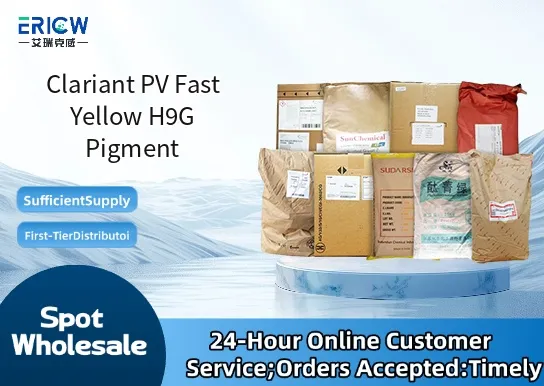
High chroma and clean greenish-yellow shade with excellent batch-to-batch consistency.
Outstanding lightfastness and weather resistance, suitable for demanding outdoor applications.
Good thermal stability up to 220 °C, enabling use in high-temperature polymer processing.
Excellent dispersibility in both polar and non-polar media, including polyolefins and PVC.
Low migration tendency and high resistance to blooming in plastic masterbatches and coatings.
Polyolefin packaging films and containers (e.g., PP, HDPE).
PVC profiles, cables, and flooring compounds.
Automotive interior plastics requiring long-term color stability.
Industrial coatings and coil coatings for metal substrates.
General-purpose printing inks for flexible packaging.
| Chemical Type | Disazo condensation pigment (Pigment Yellow 180) |
| Product Form | Fine free-flowing powder |
| Appearance | Yellow to greenish-yellow powder |
| Primary Applications | Plastics, coatings, inks |
| Key Features | High tinctorial strength, low dusting, excellent heat stability |
| Benefits | Consistent coloration, minimal filtration issues, broad compatibility |
| Regulatory Compliance | REACH registered; compliant with EU Directive 2002/61/EC for pigments |
Q1: What is the primary chemical class of PV Fast Yellow H9G?
A: PV Fast Yellow H9G is a high-performance monoazo pigment, specifically classified as a diarylide yellow pigment, offering strong tinting strength and good lightfastness in demanding applications.
Q2: Is PV Fast Yellow H9G suitable for food-contact plastics?
A: This pigment is not certified for direct food-contact applications under major global regulatory frameworks. It is intended for non-food-contact industrial and decorative uses, such as general-purpose plastics, coatings, and inks where regulatory compliance for migration is not required.
Q3: How does PV Fast Yellow H9G perform in polyolefin processing?
A: It demonstrates excellent thermal stability and dispersion behavior in polyolefins, including PP and HDPE, at typical melt-processing temperatures. Its particle size distribution and surface treatment support consistent color development and minimal plate-out during extrusion or injection molding.
Q4: What solvents or resin systems are recommended for optimal dispersion in liquid systems?
A: PV Fast Yellow H9G disperses effectively in aromatic hydrocarbon-based systems and common acrylic and polyester resins. For water-based formulations, pre-dispersion with suitable anionic or non-ionic dispersants is recommended to achieve stable, high-gloss finishes.
Contact With Us:
E-mail: wangxingqiang@ericwchem.com
Have a Questions? Call Us:
Add:
Building A1, Jiete Industrial Park, Huangpu District, Guangzhou City, Guangdong Province, China