English
 Español
 tiếng việt
 русский
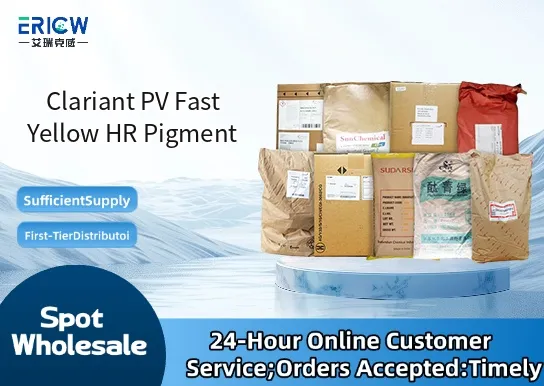
High chroma and excellent color strength for vibrant, consistent yellow shades.
Outstanding lightfastness and weather resistance suitable for demanding outdoor applications.
Good thermal stability up to 200 °C, enabling compatibility with high-temperature processing.
Excellent dispersibility in both polar and non-polar polymer systems.
Low migration tendency, ensuring color integrity in multi-layer films and food-contact-compliant formulations.
Polyolefin masterbatches (PP, PE) for packaging, automotive interior parts, and consumer goods.
Engineering plastics including ABS, PS, and PC for durable exterior components.
Flexible and rigid PVC applications such as flooring, profiles, and wire & cable sheathing.
Water-based and solvent-based industrial coatings for metal and plastic substrates.
High-performance inks for gravure and flexographic printing on packaging films.
| Chemical Type | Quinophthalone pigment |
| Product Form | Free-flowing powder |
| Appearance | Bright greenish-yellow powder |
| Primary Applications | Polyolefins, PVC, engineering plastics, coatings, inks |
| Key Features | High color strength, lightfastness, thermal stability, low migration |
| Benefits | Consistent batch-to-batch performance, easy dispersion, regulatory compliance support |
| Regulatory Status | Compliant with EU REACH; suitable for non-food-contact applications; consult local regulations for specific use cases |
Q1: What are the primary application areas for PV Fast Yellow HR pigment?
A: PV Fast Yellow HR is widely used in high-performance industrial coatings, automotive refinishes, and plastic coloration—particularly where excellent lightfastness, heat stability, and clean yellow hue are required. It is also suitable for select ink systems demanding strong tinting strength and dispersion stability.
Q2: How does PV Fast Yellow HR compare to conventional diarylide yellows in terms of environmental profile?
A: Unlike many traditional diarylide yellow pigments, PV Fast Yellow HR is a polycyclic heterocyclic yellow with no aromatic amine cleavage risk under standard processing conditions. It is designed to meet evolving regulatory expectations for safer pigment alternatives in coatings and plastics, though formal compliance status must be verified per end-use jurisdiction and formulation.
Q3: What dispersion recommendations apply for optimal performance in solvent-based coatings?
A: For solvent-based systems, pre-dispersion using high-shear mixing followed by bead milling or sand milling is recommended. Compatible dispersants include polymeric and hyperdispersant types tailored for high-polarity organic pigments. Good wetting and stabilization help maximize gloss, transparency, and color consistency.
Q4: Is PV Fast Yellow HR suitable for food-contact plastics?
A: PV Fast Yellow HR is not pre-qualified for direct food-contact applications. Its use in plastics intended for food contact requires full formulation-level evaluation—including migration testing and regulatory review—by the compounder or end-user, in accordance with applicable regional requirements.
Contact With Us:
E-mail: wangxingqiang@ericwchem.com
Have a Questions? Call Us:
Add:
Building A1, Jiete Industrial Park, Huangpu District, Guangzhou City, Guangdong Province, China