English
 Español
 tiếng việt
 русский
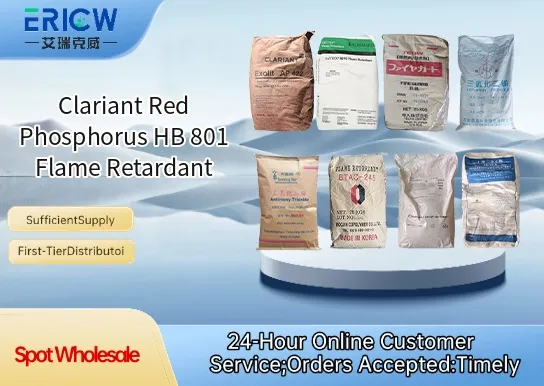
High-efficiency flame retardancy with low loading levels in thermoplastics and thermosets.
Excellent thermal stability up to 300 °C, supporting high-temperature processing such as injection molding.
Low smoke and halogen-free formulation, contributing to improved fire safety and reduced toxic gas emission.
Good dispersion characteristics in polymer matrices without requiring surface treatment.
Compatible with polyamides (PA6, PA66), polyesters (PBT, PET), and epoxy resins.
Electrical and electronic components requiring UL 94 V-0 rating.
Automotive interior parts including connectors, housings, and sensor enclosures.
Industrial machinery housings exposed to elevated operating temperatures.
LED lighting fixtures demanding low-smoke, halogen-free flame retardancy.
Consumer appliance casings where regulatory compliance (e.g., RoHS, REACH) is critical.
| Chemical Type | Elemental red phosphorus |
| Product Form | Free-flowing granular powder |
| Appearance | Dark red to burgundy granules |
| Phosphorus Content (P) | ≥ 85.0 wt.% |
| Moisture Content | ≤ 0.3 wt.% |
| Particle Size (d50) | 120–180 µm |
| Primary Applications | Flame retardant for engineering thermoplastics and thermosets |
| Key Features | Halogen-free, low smoke, high thermal stability |
Q1: What are the key advantages of Clariant Red Phosphorus HB 801 compared to conventional red phosphorus flame retardants?
A: HB 801 features a proprietary surface treatment that significantly improves thermal stability, reduces dust formation during handling, and enhances compatibility with engineering thermoplastics—especially polyamides and polyesters—without compromising mechanical properties or processing safety.
Q2: Is HB 801 suitable for halogen-free flame-retarded compounds targeting UL 94 V-0 at thin wall sections?
A: Yes—HB 801 is specifically designed for high-efficiency halogen-free flame retardancy in demanding applications. When properly compounded, it enables UL 94 V-0 performance at 1.6 mm and 0.8 mm thicknesses in polyamide 6 and PA66 systems, particularly when combined with synergistic mineral fillers or nitrogen-based co-additives.
Q3: How should HB 801 be incorporated into thermoplastic formulations to ensure optimal dispersion and flame performance?
A: For best results, HB 801 should be introduced via masterbatch or gravimetric feeding during compounding. Twin-screw extrusion is recommended, with moderate shear and controlled barrel temperatures to preserve its surface integrity. Pre-drying is not required, but storage under dry conditions is advised to maintain handling characteristics.
Q4: Does HB 801 affect the color or long-term stability of final polymer parts?
A: HB 801 delivers excellent color neutrality in natural and light-colored compounds, with minimal impact on initial hue. Its stabilized surface treatment also helps suppress phosphorus-related oxidation pathways, contributing to improved thermal and color stability during repeated processing and end-use exposure.
Contact With Us:
E-mail: wangxingqiang@ericwchem.com
Have a Questions? Call Us:
Add:
Building A1, Jiete Industrial Park, Huangpu District, Guangzhou City, Guangdong Province, China