English
 Español
 tiếng việt
 русский
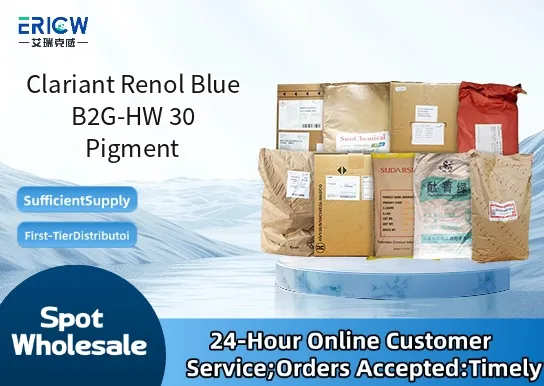
High chroma and excellent bluish-shade neutrality for precise color matching in demanding applications.
Outstanding thermal stability up to 280 °C, suitable for high-temperature polymer processing.
Excellent lightfastness and weather resistance (ISO 105-B02, Grade 7–8) in outdoor applications.
Good dispersibility in both polar and non-polar polymer matrices, including polyolefins and engineering plastics.
Compliant with major global regulatory frameworks including REACH, RoHS, and FDA 21 CFR §178.3297 for food-contact applications.
Polyolefin masterbatches for automotive interior components.
Engineering plastic compounds used in consumer electronics housings.
Food-grade packaging films and containers requiring FDA compliance.
Outdoor building profiles and façade elements requiring UV durability.
Industrial wire & cable sheathing where thermal and migration resistance are critical.
| Chemical Type | High-performance phthalocyanine pigment (CuPc derivative) |
| Product Form | Free-flowing granular concentrate |
| Appearance | Uniform blue granules, free of visible specks or dust |
| Primary Applications | Polyolefins, polyesters, ABS, PC/ABS blends |
| Key Features | Thermal stability, low volatility, high tinctorial strength |
| Benefits | Reduced plate-out, consistent color batch-to-batch, minimal filter clogging |
| Recommended Carrier | PP or HDPE base (compatible with standard masterbatch systems) |
| Storage Conditions | Store in dry, cool conditions (<25 °C); protect from direct sunlight and moisture |
Q1: What is the primary application area for Renol Blue B2G-HW 30?
A: Renol Blue B2G-HW 30 is specifically developed for high-temperature, high-performance engineering thermoplastics—particularly polyamide (PA6, PA66) and polyphthalamide (PPA)—where excellent thermal stability, dispersion, and color consistency are required during melt processing.
Q2: Is this pigment suitable for food-contact applications?
A: Renol Blue B2G-HW 30 is designed to meet stringent regulatory expectations for indirect food contact in plastics, subject to final formulation compliance. It contains no intentionally added heavy metals or restricted substances, and its use in food-contact systems requires validation per applicable regional regulations and end-product testing.
Q3: How does B2G-HW 30 differ from standard Renol Blue grades?
A: The “HW” designation indicates enhanced heat stability and reduced volatility under prolonged high-temperature processing conditions—critical for demanding injection molding and extrusion of engineering polymers. It also features optimized particle surface treatment for improved dispersion and reduced plate-out in processing equipment.
Q4: What is the typical dosage range in polymer systems?
A: Dosage depends on the desired shade strength and polymer matrix, but it is typically used at low concentrations—generally ranging from 0.1% to 2% by weight—due to its high tinctorial strength and efficient dispersion characteristics.
Contact With Us:
E-mail: wangxingqiang@ericwchem.com
Have a Questions? Call Us:
Add:
Building A1, Jiete Industrial Park, Huangpu District, Guangzhou City, Guangdong Province, China