English
 Español
 tiếng việt
 русский
High thermal stability suitable for demanding high-speed extrusion processes.
Excellent lightfastness and weather resistance for long-term outdoor performance.
Good dispersibility in polyolefin and PVC compounds without requiring additional dispersing aids.
Low migration behavior ensuring color consistency in food-contact-compliant applications.
Halogen-free formulation meeting stringent regulatory requirements for eco-friendly manufacturing.
Coloration of polypropylene (PP) and polyethylene (PE) fibers and nonwovens.
Masterbatch production for automotive interior components.
PVC window profiles and siding requiring UV durability and color retention.
Food packaging films where regulatory compliance and low extractables are critical.
Engineering plastics including ABS and PS for consumer electronics housings.
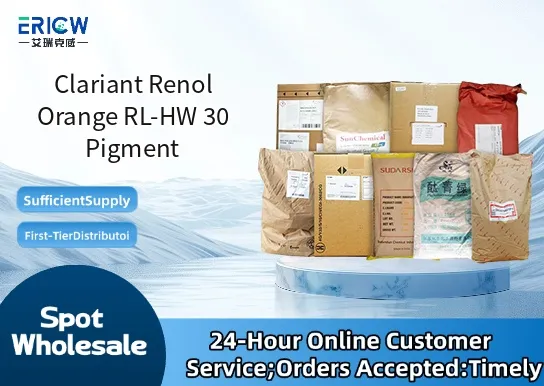
| Chemical Type | Azo pigment (Benzimidazolone derivative) |
| Product Form | Free-flowing powder |
| Appearance | Orange-red free-flowing powder |
| Primary Applications | Polyolefins, PVC, engineering thermoplastics |
| Key Features | Thermally stable, halogen-free, low migration |
| Regulatory Compliance | EU REACH registered; compliant with FDA 21 CFR §178.3297 for food-contact plastics |
| Heat Stability | Up to 280 °C (5 min, polyolefin) |
| Lightfastness (ISO 105-B02) | 7–8 (on blue wool scale) |
Q1: What is the primary application field for Renol Orange RL-HW 30?
A: Renol Orange RL-HW 30 is specifically developed for high-temperature polymer processing applications, particularly in polyolefins such as PP and HDPE, where thermal stability and color consistency during extrusion or injection molding are critical.
Q2: Is this pigment suitable for food-contact plastics?
A: Renol Orange RL-HW 30 is designed for use in polymers intended for food-contact applications, subject to compliance with applicable regional regulations. Users must verify suitability based on their specific formulation, processing conditions, and end-use requirements through appropriate regulatory assessment.
Q3: How does RL-HW 30 differ from standard Renol Orange RL-HW grades?
A: The “30” designation indicates a pre-dispersed, carrier-based masterbatch formulation optimized for enhanced dispersion efficiency and reduced dust generation. It offers improved handling and more consistent dosing compared to dry pigment forms, especially in automated compounding systems.
Q4: What is the recommended dosage range for optimal coloration?
A: Dosage depends on the desired shade intensity, polymer type, and processing method, but it is typically used at low concentrations—generally ranging from 0.1% to 2% by weight of the final compound—to achieve vibrant, uniform orange hues without compromising physical properties.
Contact With Us:
E-mail: wangxingqiang@ericwchem.com
Have a Questions? Call Us:
Add:
Building A1, Jiete Industrial Park, Huangpu District, Guangzhou City, Guangdong Province, China