English
 Español
 tiếng việt
 русский
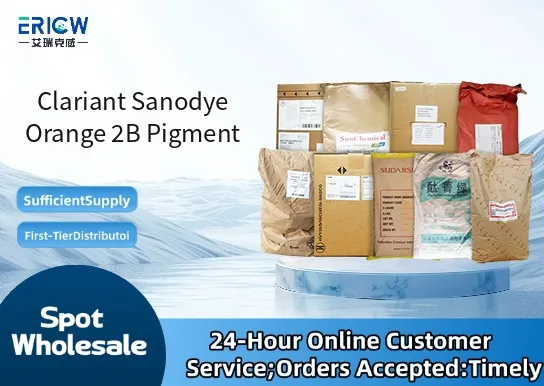
High chroma and clean orange shade with excellent color strength.
Outstanding thermal stability suitable for high-temperature processing up to 260 °C.
Good lightfastness and weather resistance in demanding outdoor applications.
Excellent dispersibility in both polar and non-polar polymer systems.
Compliant with major global regulatory frameworks including REACH and RoHS.
Automotive interior and exterior plastics (PP, ABS, PC).
Engineering thermoplastics for electronic housings and consumer appliances.
Masterbatch formulations for wire & cable sheathing and industrial profiles.
Food-contact-compliant packaging films (subject to local regulatory approval).
Industrial coatings requiring durable, fade-resistant orange hues.
| Chemical Type | Azo pigment (Disazo) |
| Product Form | Free-flowing powder |
| Appearance | Orange-red free-flowing powder |
| Primary Applications | Plastics, masterbatches, coatings |
| Key Features | Thermal stability, dispersion performance, regulatory compliance |
| Particle Size (D50) | 0.15–0.25 µm (by laser diffraction) |
| Heat Resistance | Up to 260 °C (30 min, air) |
| VOC Content | Non-volatile; < 0.1% w/w |
Q1: What is the primary chemical class of Sanodye Orange 2B?
A: Sanodye Orange 2B is an azo-based organic pigment, specifically designed for high chroma and clean orange hue in demanding polymer applications.
Q2: Is this pigment suitable for food-contact plastics?
A: Sanodye Orange 2B is not intended for direct food-contact applications. It is formulated for general-purpose industrial and decorative plastics where regulatory compliance for food contact is not required.
Q3: How does Sanodye Orange 2B perform under thermal processing conditions?
A: This pigment demonstrates good thermal stability suitable for standard melt-processing temperatures of polyolefins and styrenics, though extended residence at elevated temperatures may affect shade intensity.
Q4: What are typical dosage levels when incorporating Sanodye Orange 2B into plastics?
A: Dosage depends on formulation requirements and desired opacity or transparency, but it is typically used at low concentrations—generally ranging from 0.1% to 2% by weight in the final polymer matrix.
Contact With Us:
E-mail: wangxingqiang@ericwchem.com
Have a Questions? Call Us:
Add:
Building A1, Jiete Industrial Park, Huangpu District, Guangzhou City, Guangdong Province, China