English
 Español
 tiếng việt
 русский
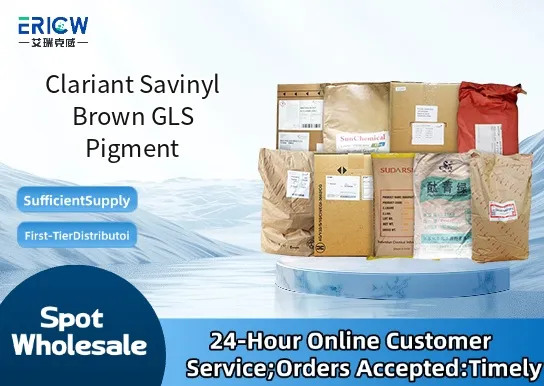
High chroma and excellent lightfastness for durable brown coloration.
Good thermal stability suitable for processing temperatures up to 200 °C.
Low volatility and minimal extractables, supporting compliance with stringent regulatory requirements.
Excellent dispersibility in polar and non-polar polymer matrices including PVC, PS, and ABS.
Halogen-free formulation aligned with modern sustainability and safety standards.
PVC profiles and window frames requiring weather-resistant brown shades.
Automotive interior components including dashboards and trim parts.
Household appliances housings and control panels.
Engineering thermoplastics for technical parts in consumer electronics.
General-purpose rigid and flexible plastic packaging with aesthetic brown tones.
| Chemical Type | Azo pigment (disazo) |
| Product Form | Free-flowing powder |
| Appearance | Dark brown powder |
| Primary Applications | PVC, PS, ABS, and other engineering thermoplastics |
| Key Features | High tinctorial strength, good heat stability, halogen-free |
| Benefits | Consistent batch-to-batch color performance and easy incorporation |
| Regulatory Compliance | EU REACH registered; compliant with FDA 21 CFR §178.3297 for indirect food contact |
| Storage Conditions | Store in cool, dry place below 30 °C; protect from moisture and direct sunlight |
Q1: What is the primary application area for Savinyl Brown GLS Pigment?
A: Savinyl Brown GLS Pigment is specifically developed for coloration of polyolefin-based packaging materials, including flexible films and rigid containers intended for food contact applications where regulatory compliance and thermal stability are critical.
Q2: Is Savinyl Brown GLS suitable for high-temperature processing such as injection molding or blow molding?
A: Yes — it is engineered for excellent thermal stability and dispersion performance in polyolefins processed at elevated temperatures, maintaining consistent color strength and minimal volatile generation during extrusion and molding operations.
Q3: How does Savinyl Brown GLS differ from conventional organic brown pigments in polyolefin applications?
A: It offers superior migration resistance and reduced plate-out tendency compared to many standard organic browns, along with enhanced compatibility with common polyolefin additives such as antioxidants and UV stabilizers.
Q4: What is the typical dosage range when using Savinyl Brown GLS in polypropylene or polyethylene formulations?
A: Dosage depends on the desired shade intensity and substrate thickness, but it is typically used at low concentrations — generally ranging from 0.1% to 2% by weight — with optimal results achieved through lab-scale dispersion trials and rheological evaluation.
Contact With Us:
E-mail: wangxingqiang@ericwchem.com
Have a Questions? Call Us:
Add:
Building A1, Jiete Industrial Park, Huangpu District, Guangzhou City, Guangdong Province, China