English
 Español
 tiếng việt
 русский
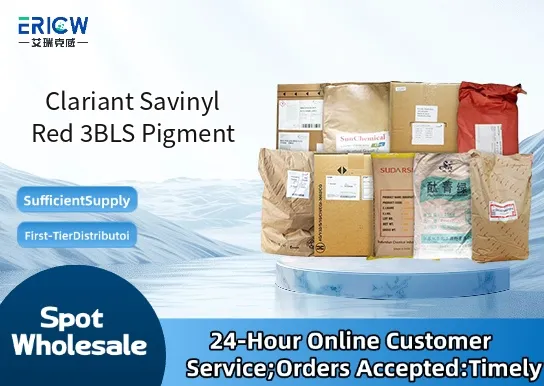
High chroma and excellent color strength for vibrant, consistent red shades.
Outstanding thermal stability suitable for high-temperature processing up to 280 °C.
Good lightfastness and weather resistance in demanding outdoor applications.
Excellent dispersibility in both polar and non-polar polymer matrices.
Compliant with major global regulatory frameworks including EU REACH and US FDA 21 CFR for indirect food contact applications.
Polyolefin fibers and spunbond/meltblown nonwovens.
Engineering plastics including polypropylene (PP), polyethylene (PE), and ABS.
Masterbatch formulations for automotive interior components.
Food packaging films requiring migration-compliant colorants.
Consumer goods housings and durable household appliances.
| Chemical Type | Azo pigment (Benzimidazolone derivative) |
| Product Form | Free-flowing powder |
| Appearance | Reddish-brown free-flowing powder |
| Primary Applications | Polyolefins, engineering thermoplastics, masterbatches |
| Key Features | Thermal stability, dispersion performance, regulatory compliance |
| Benefits | Color consistency, low dust generation, process robustness |
| Particle Size (D50) | 0.15–0.25 µm (by laser diffraction) |
| Heat Resistance | Up to 280 °C (short-term, in PP) |
Q1: What is the primary application field for Savinyl Red 3BLS?
A: Savinyl Red 3BLS is a high-performance azo pigment specifically developed for use in water-based inkjet inks, particularly for industrial textile printing applications requiring excellent lightfastness and wet fastness on polyester and polyamide substrates.
Q2: Is Savinyl Red 3BLS suitable for food-contact or medical-grade applications?
A: No — Savinyl Red 3BLS is not approved for direct food contact or medical device applications. It is intended for industrial decorative and functional textile printing where regulatory compliance focuses on end-use performance rather than migration or biocompatibility requirements.
Q3: How does Savinyl Red 3BLS compare to conventional organic red pigments in terms of dispersion stability?
A: Savinyl Red 3BLS features optimized surface chemistry for enhanced colloidal stability in aqueous dispersions, enabling lower viscosity formulations and improved jetting reliability compared to many standard azo pigments — especially under extended storage or thermal stress conditions typical in digital textile printing systems.
Q4: What are the recommended processing conditions for incorporating Savinyl Red 3BLS into ink formulations?
A: The pigment is supplied as a stable aqueous dispersion and is typically incorporated via low-shear mixing at ambient temperature. High-energy milling or ultrasonication is generally not required. Final ink pH should be maintained between 7.5 and 9.0 to preserve dispersion integrity and color consistency.
Contact With Us:
E-mail: wangxingqiang@ericwchem.com
Have a Questions? Call Us:
Add:
Building A1, Jiete Industrial Park, Huangpu District, Guangzhou City, Guangdong Province, China