English
 Español
 tiếng việt
 русский
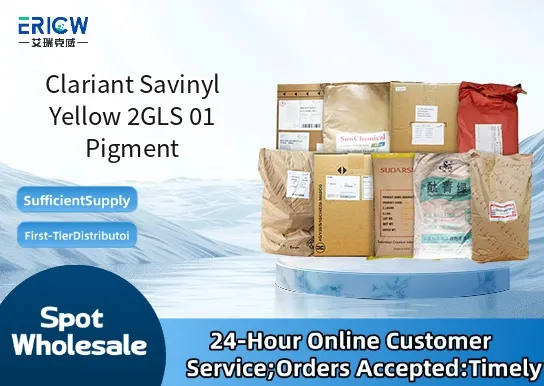
High chroma yellow shade with excellent lightfastness and weather resistance.
Optimized dispersibility in aqueous and solvent-based systems for consistent color development.
Good thermal stability suitable for low- to medium-temperature processing applications.
Compliant with major global regulatory frameworks including REACH and RoHS.
Low volatile organic compound (VOC) contribution, supporting sustainable formulation goals.
Architectural and industrial waterborne coatings.
Automotive refinish coatings requiring high clarity and clean hue.
Plastic coloration for rigid PVC and ABS applications.
Inks for packaging and labeling where lightfastness is critical.
Wood stains and transparent decorative finishes.
| Chemical Type | Azo pigment (disazo) |
| Product Form | Free-flowing powder |
| Appearance | Bright greenish-yellow powder |
| Primary Applications | Coatings, inks, plastics |
| Key Features | High transparency, good dispersion, balanced fastness profile |
| Benefits | Efficient tinting strength, low dust generation during handling |
| Storage Conditions | Store in cool, dry place; protect from moisture and direct sunlight |
| Regulatory Status | REACH registered; non-CMR, non-PBT/vPvB |
Q1: What is the primary chemical class of Savinyl Yellow 2GLS 01?
A: Savinyl Yellow 2GLS 01 is a monoazo pigment, specifically designed for high-performance applications requiring excellent lightfastness and thermal stability in polymer systems.
Q2: Is this pigment suitable for food-contact plastics?
A: Savinyl Yellow 2GLS 01 is not certified for direct food-contact applications under major global regulatory frameworks. It is intended for non-food-contact industrial and decorative plastic products where high chroma and dispersion stability are required.
Q3: How does this pigment perform during high-temperature processing, such as injection molding?
A: The pigment exhibits good thermal stability up to approximately 280 °C, making it suitable for standard polyolefin and styrenic processing conditions. Performance may vary depending on residence time, shear profile, and resin matrix.
Q4: What is the recommended method for incorporating Savinyl Yellow 2GLS 01 into polymer melts?
A: For optimal dispersion and color development, masterbatch dilution is strongly recommended. Direct addition may lead to inconsistent coloration; pre-dispersed concentrates ensure uniform distribution and reduce processing variability.
Contact With Us:
E-mail: wangxingqiang@ericwchem.com
Have a Questions? Call Us:
Add:
Building A1, Jiete Industrial Park, Huangpu District, Guangzhou City, Guangdong Province, China