English
 Español
 tiếng việt
 русский
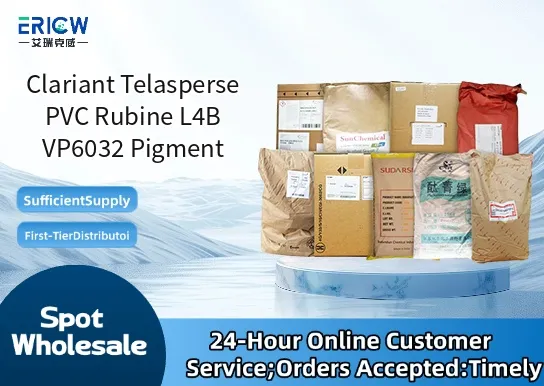
High thermal stability for demanding PVC processing conditions up to 200 °C.
Excellent dispersion performance in rigid and flexible PVC compounds without requiring additional dispersing agents.
Outstanding lightfastness and weather resistance, maintaining color integrity under UV exposure.
Low migration tendency, ensuring color permanence in contact-sensitive applications including food-contact compliant formulations.
Optimized particle size distribution for enhanced tinting strength and uniform hue development in transparent and opaque PVC systems.
Rigid PVC profiles for window frames and siding.
Flexible PVC flooring and wall coverings.
PVC medical tubing and packaging films requiring FDA-compliant colorants.
Automotive interior trims and dashboards.
Wire and cable insulation with stringent regulatory compliance requirements.
| Chemical Type | Quinacridone-based organic pigment |
| Product Form | Free-flowing powder |
| Appearance | Red-violet fine powder |
| Primary Applications | PVC (rigid & flexible), plastisols, calendered films |
| Key Features | Thermally stable, low migration, high tinctorial strength |
| Compliance | EU REACH registered; compliant with EN 71-3 for toys |
| Recommended Loading Range | 0.5–3.0 phr (parts per hundred resin) |
| Storage Conditions | Store in cool, dry place below 30 °C; protect from moisture and direct sunlight |
Q1: What is the primary application field for Telasperse PVC Rubine L4B VP6032?
A: This pigment is specifically engineered for coloring rigid and flexible PVC compounds, including profiles, pipes, flooring, cables, and medical tubing—where high thermal stability during processing and excellent dispersion in PVC matrices are critical.
Q2: Is this pigment suitable for food-contact or medical-grade PVC applications?
A: Telasperse PVC Rubine L4B VP6032 is formulated to meet stringent regulatory expectations for indirect food contact and medical device applications. Its purity profile and absence of heavy metals support compliance with relevant global frameworks—however, final suitability must be confirmed through end-product testing and regulatory review per intended use.
Q3: How does this pigment perform under standard PVC processing conditions?
A: It demonstrates excellent thermal stability up to typical PVC processing temperatures (160–190 °C), minimal color shift during extrusion or calendering, and robust resistance to migration and blooming—especially when properly dispersed and compounded with compatible stabilizer systems.
Q4: What is the recommended dosage range for optimal color strength and performance?
A: Dosage depends on formulation requirements, desired shade intensity, and PVC type—but it is typically used at low concentrations, generally ranging from 0.1% to 2% by weight of the total compound. Precise levels should be determined via lab-scale trials and rheological evaluation.
Contact With Us:
E-mail: wangxingqiang@ericwchem.com
Have a Questions? Call Us:
Add:
Building A1, Jiete Industrial Park, Huangpu District, Guangzhou City, Guangdong Province, China